America’s Iran Trap Is Closing
Carrier strike groups, nuclear deadlines and a brittle regime in Tehran are converging on a moment where Washington may discover that every move—strike, sabotage or restraint—ends in escalation
29 January 2026· 4 min read
TL;DR
This critical analysis reveals a dangerous geopolitical "trap" emerging in US-Iran relations, where any strategic move—from preventive strikes to attempted destabilization—risks significant escalation. With US military forces converging and Iran's internal fragility, the article dissects two high-stakes US options, both potentially pushing Tehran towards nuclearization and igniting a broader regional conflict, unlike simpler regime changes. For business leaders, this scenario underscores profound risks to global energy markets, supply chains, and regional stability. It demands proactive geopolitical risk assessment and robust contingency planning to navigate an increasingly volatile and unpredictable landscape, where traditional outcomes are unlikely and miscalculation carries severe consequences.

Editor’s Note: In an earlier Founding Fuel piece, Iran at the Brink: Five Scenarios That Could Reshape the Region (published on January 12, 2026), Vivek Y. Kelkar examined how economic strain, political unrest and external pressure were pushing Tehran toward a dangerous inflection point. This essay extends that analysis as military and nuclear pressures converge.
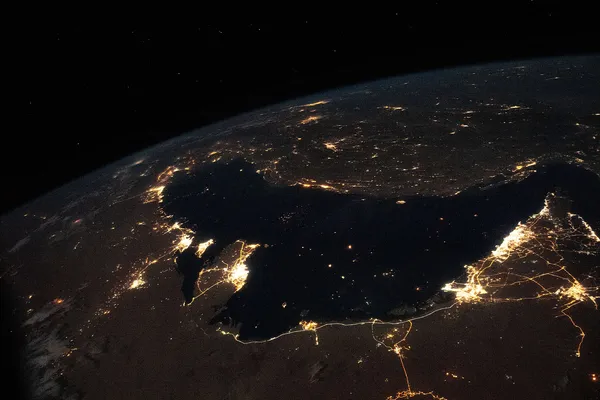
The USS Abraham Lincoln, together with its armada of cruise-missile destroyers and attack submarines is converging near the Gulf of Oman. President Donald Trump warns Iran’s Ayatollah-IRGC regime that “time is running out” for a nuclear deal, and the Middle East is edging toward yet another dangerous inflection point. Tehran is saying its “finger is on the trigger” and vows immediate retaliation against any strike. Between those dueling signals lies a volatile mix of nuclear brinkmanship, fragile regional alignments, and the ever-present risk that a single miscalculation could ignite a regional conflagration the world could do without
What makes the moment even more combustible is the fragile internal condition of Iran’s economy and polity. The regime might have used force to quell the internal protests but its long-term future remains uncertain.
Washington’s Options
The Trump-led US administration could be evaluating two scenarios. One, it might consider a preventive strike on Iran’s nuclear and missile architecture. Trump has warned that “time is running out” for a nuclear deal, while US officials openly discuss options against enrichment facilities and ballistic-missile forces.
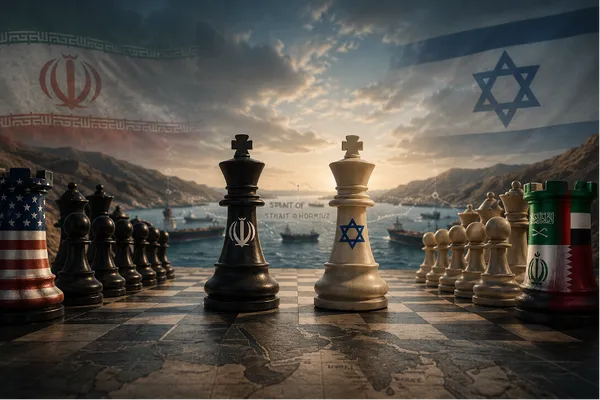
This scenario could envisage a limited campaign aimed at degrading centrifuges, missile launchers and air defences that would be framed as delaying Iran’s nuclear threshold status. Iran would, however, interpret it as the opening salvo of a broader regime change war. It would almost certainly accelerate the regime’s determination to cross a war threshold, engulfing not just US allies like Israel, Qatar and Saudi Arabia, but hardening the Ayatollah-IRGC regime’s stance on nuclear weaponisation. This scenario depends upon both Trump’s personal analysis of events as they unfold, and his administration’s assessment of Iran’s immediate military capabilities. The ensuing risk is that a miscalculation could have serious, hard to contain, consequences.
Unlike Venezuela the Ayatollah-IRGC regime is firmly embedded. It retains a strong military, strengthened by regional proxies. Eliminating the regime’s leadership will not be as quick or as easy as Venezuela, more so after the Israeli and American actions in 2025.
The second scenario is US-driven internal destabilisation. US sources suggest Trump is weighing strikes designed to inspire renewed protests after a brutal crackdown that killed thousands. However, US Secretary of State Marco Rubio said on Wednesday that there is no clear picture of who could succeed Ayatollah Ali Khamenei if Iran’s supreme leader were to be pushed from power, even as he alluded to the possibility of US military action. He conceded that any such scenario would be vastly more complicated than recent actions in Venezuela, and would demand a deeper degree of strategic deliberation. Reza Pahlavi, despite his continuing exhortations from his base in the US, remains an unknown factor.
The Region’s Impossible Dilemmas
Saudi Arabia, the UAE, Qatar and Oman now sit at the intersection of alliance obligations and war-driven vulnerability. Riyadh and Abu Dhabi have publicly said they will not allow their territory or airspace to be used for strikes on Iran. Qatar, too, is unwilling. They fear becoming immediate targets of Iranian retaliation more than they fear Washington’s displeasure.
The Gulf monarchies are, therefore, signalling that US bases in the region are not blank cheques for offensive war—a stance that might have long-term geopolitical consequences for Washington. From an oil-economy perspective, their calculus is even starker. The 2019 missile and drone attack on Saudi Aramco facilities, attributed to an Iranian-backed militia, demonstrated how cheaply and effectively Iran can inflict massive economic damage. A regional war would place refineries, export terminals and pipelines, and economies, squarely in Tehran’s crosshairs.
Oman, which sits astride the Strait of Hormuz, would be thrust into a dual role: diplomatic go-between and frontline state. Qatar, host to major US forces and a global LNG powerhouse, faces similar exposure.
Israel’s Narrowing Options
For Israel, a US strike on Iran would be both vindication and danger. Tehran has warned that any American attack would trigger “unprecedented” retaliation, including strikes “at the heart of Tel Aviv”. Iran may be weaker after Israel’s efforts last year attacking its proxies, but it still retains large missile and drone arsenals.
If Tehran attacks following a US strike, Netanyahu’s likely response would be threefold. First, intensified defensive and pre-emptive operations against Hezbollah and other Iranian-aligned groups to blunt multi-front retaliation. Second, pressure on Washington to ensure that any US campaign meaningfully degrades Iran’s nuclear capacity, not merely signals resolve intensifying a war. Third, Israel would join the US in striking targets within Iran, which means overflying some Gulf states and raising the regional ante further.
Energy Markets
Just over 22% of global oil and LNG flows transit the Strait of Hormuz each year. Brent oil prices are now hovering around the $70 mark, factoring in the risk of war—the highest level since September 2025. Iran has rehearsed mining and harassment operations in these waters for decades. Even limited disruption would spike insurance premiums, freight rates and prices.
A closure of Hormuz is unlikely to be total or sustained—US and allied navies would move to clear the lanes—but even intermittent interference could destabilise markets and tip fragile economies into energy-driven inflation. For importers across Asia and Europe, this is the nightmare scenario.
Four Paths Emerge
The first is coercive diplomacy. The US armada remains in place, but back-channel negotiations intensify, perhaps narrowing first to the nuclear issue, as Turkey has suggested. This would imply the threat of force as backdrop to talks—a scenario where the US interdicts Iran’s oil-laden ships in the Gulf of Oman and beyond. With its constrained economy, Iran may be forced to start effective negotiations with the US. But this also depends on the Ayatollah-IRGC regime’s calculus about the long-term commitment of the US to military action.
The second is a limited US strike, tightly scoped and publicly framed as defensive or preventive. Retaliation follows. The US tries to cap escalation, but the outcomes here could spiral quickly into unpredictability with both regional and global consequences
The third is uncontrolled escalation, triggered by miscalculation—an errant missile, a proxy attack, or a false intelligence alarm—drawing the US, Iran, Israel and regional actors into a widening conflict.
None of these paths offers an endgame. Iran’s economy is already near suspended animation, with inflation above 40% and growth barely positive. The Ayatollah-IRGC regime is brittle, but not necessarily breakable by air power alone. A US invasion with ground forces is politically unpalatable and militarily a quagmire.
The most palatable path is Turkey and Arab pressure on the Iranian regime to negotiate over its nuclear ambitions, giving Trump an offramp and leaving the regime in place at least for the moment. It must be noted, however, that both Iran and regional stability are intimately tied into the Gaza issue, and despite Israel’s unwillingness to militarily vacate the Strip, the ceasefire still holds and a semblance of peace pervades.
Join the conversation
Vivek Y. Kelkar
Researcher, Analyst & Columnist on Geo-economics, Geopolitics and Sustainability
Vivek Y. Kelkar is a researcher, analyst, and columnist working at the intersection of geo-economics, geopolitics, and sustainability. His work explores global power shifts, strategy, trade transitions, and the geopolitics of climate-related systemic risk—integrating political economy with emerging trends across China, Southeast Asia, and the Middle East. He also writes for Moneycontrol, Modern Diplomat, Asia Times, and The Spectator.
Vivek brings extensive global management experience in M&A, strategy, brand and stakeholder management, and sustainability, alongside deep involvement in media.
He is a Visiting Faculty at IIM-Indore, and has delivered conference papers and participated in expert panels with institutions like the Institute of Chinese Studies, India, besides moderating at online forums.
Vivek holds an MA in International Political Economy from the University of Sheffield and an MBA from Ashridge Business School.
Beyond the noise is the signal.
FF Insights: Sharpen your edge, Monday–Friday.
FF Life: Culture, ideas and perspectives you won't find elsewhere — Saturday.

Founding Fuel is sustained by readers who value depth, context, and independent thinking.
If this essay helped you think more clearly, you may choose to support our work.

Founding Fuel is sustained by readers who value depth, context, and independent thinking.
If this essay helped you think more clearly, you may choose to support our work.
Loading comments...



Readers also liked

·Economy, Policy & Society
The Year the World Learned to Live Without America
How Trump’s tariffs, Europe’s capitulation, China’s counter-moves and India’s narrowing room for manoeuvre reshaped the global order.
DN

Dinesh Narayanan
Independent journalist | Author of The RSS and The Making of The Deep Nation
The Year the World Learned to Live Without America
How Trump’s tariffs, Europe’s capitulation, China’s counter-moves and India’s narrowing room for manoeuvre reshaped the global order.
Independent journalist | Author of The RSS and The Making of The Deep Nation

·Economy, Policy & Society
Who Will Win the MAGA Crown?
Three competing visions inside the MAGA movement—over AI, immigration and national sovereignty—may determine America’s technological doctrine for the next decade
SW

Sundeep Waslekar
President | Strategic Foresight Group
Who Will Win the MAGA Crown?
Three competing visions inside the MAGA movement—over AI, immigration and national sovereignty—may determine America’s technological doctrine for the next decade
President | Strategic Foresight Group

·Economy, Policy & Society
Trump's Tariff Gambit and the Global Trade Dilemma
In the Indo-Pacific, America’s transactionalism collides with its strategic incoherence—posing hard choices for its partners
VK

Vivek Y. Kelkar
Researcher, Analyst & Columnist on Geo-economics, Geopolitics and Sustainability
Trump's Tariff Gambit and the Global Trade Dilemma
In the Indo-Pacific, America’s transactionalism collides with its strategic incoherence—posing hard choices for its partners
Researcher, Analyst & Columnist on Geo-economics, Geopolitics and Sustainability
Explore more
Dive into other themes from our network.