
FF Daily #246: How to get the right things done
December 4, 2020: Greg McKewon on focusing on the truly essential; Rama Bijapurkar on managing consumer businesses in turbulent times; Kiran Mazumdar-Shaw on what’s wrong with Atmanirbhar Bharat
4 December 2020· 4 min read
TL;DR
This FF Daily issue offers crucial insights for business leaders navigating complexity. Drawing from Greg McKewon's 'Essentialism,' it champions a disciplined pursuit of less, prioritizing doing the right things over merely doing more. Leaders are urged to 'Explore, Evaluate, Execute,' strategically investing time and energy for maximum contribution, thereby reclaiming choice and enhancing effectiveness. Complementing this strategic focus, Rama Bijapurkar emphasizes imagination in managing turbulent consumer markets. She contends businesses must proactively lead and guide, not passively await consumer directives, to effectively create and capture value through bold innovation and de-risking. These ideas provide a compelling blueprint for focused strategy and agile leadership in challenging times.

Good morning,
It’s Friday. While most of us will work through the day, towards the end of the day, and later tomorrow, may we urge you to take time out, to pause a while, and ask yourself: How am I doing? How do I plan to live in the days and months ahead? To aid that, we culled some passages from Essentialism: The Disciplined Pursuit of Less by Greg McKewon.
“There are far more activities and opportunities in the world than we have time and resources to invest in. And although many of them may be good, or even very good, the fact is that most are trivial and few are vital. The way of the Essentialist involves learning to tell the difference—learning to filter through all those options and selecting only those that are truly essential. Essentialism is not about how to get more things done; it’s about how to get the right things done. It doesn’t mean just doing less for the sake of less either. It is about making the wisest possible investment of your time and energy in order to operate at your highest point of contribution by doing only what is essential.”
McKewon then goes on to break the “Essentialist Approach” into three parts.
- Explore: “Will this activity or effort make the highest possible contribution towards my goal?”
- Evaluate: “If I didn’t already own this, how much would I spend to buy it?” This usually does the trick.
- Execute: It’s a method for making the tough trade-off between lots of good things and a few really great things. It’s about learning how to do less but better so you can achieve the highest possible return on every precious moment of your life.
“When we forget our ability to choose, we learn to be helpless. Drip by drip we allow our power to be taken away until we end up becoming a function of other people’s choices—or even a function of our own past choices. In turn, we surrender our power to choose. That is the path of the non-Essentialist. The Essentialist doesn’t just recognise the power of choice, he celebrates it. The Essentialist knows that when we surrender our right to choose, we give others not just the power but also the explicit permission to choose for us.
“Is there a point at which doing more does not produce more? Is there a point at which doing less (but thinking more) will actually produce better outcomes?”
To hammer the point home, he suggests we think of Warren Buffett, who has famously said, “Our investment philosophy borders on lethargy.”
In this issue.
- Rama Bijapurkar on managing consumer businesses in turbulent times
- Kiran Mazumdar-Shaw on what’s wrong with Atmanirbhar Bharat
- A rabbit army
Have a good day.
(Note: Founding Fuel may earn commissions for purchases made through the Amazon links in this article.)
Rama Bijapurkar on managing consumer businesses in turbulent times
In her presentation at the Ascent Conclave, Rama Bijapurkar, market strategist, thought leader and independent board member, made a case that businesses have to lead and guide to provide value to, and extract value from consumers. The possibilities are huge, she said, and imagination is the key.
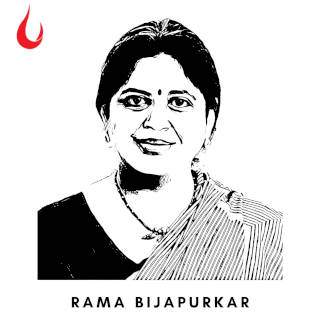
“The job of business is not to ask consumers for answers and wait for consumers to provide the answers”
“Imagination, in terms of how to fix things, is really important.
“It's not just the big boys, small vendors have also pivoted. The sabziwala across the road from me does not carry inventory anymore. Just think of how much he has derisked himself. He says, ‘Send me WhatsApp the previous night. No matter how exotic, no matter how small, I will get it for you.’ He says that now the tempos are coming in from Nashik and other places into Mumbai with fresh vegetables at various points in the city. He doesn't have to spend money to go to the mandi and, being a small player, get whatever leftovers there are. It is a whole lot of possibilities.
“If we don't take advantage of the possibilities as well as add value to the consumers, I think we are going to go back to some form of status quo and life will go on.
“The job of business is not to ask consumers for answers and wait for consumers to provide the answers. The job of business at times like this is to lead and guide people through these times.
“Yes, these are challenging times that consumers have been through. Don't assume everything has changed. Please walk on the streets and discover a little bit.”
Dig Deeper
Kiran Mazumdar-Shaw on what’s wrong with Atmanirbhar Bharat
In an interview with Kiran Mazumdar-Shaw, Biocon founder, McKinsey Quarterly asked what Shaw was worried about. Her answer was insightful—and important.
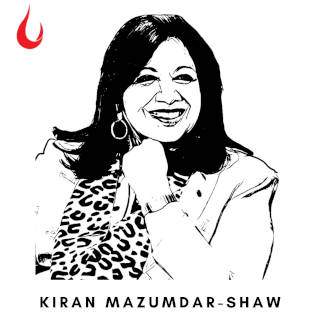
“What we don’t realize is that the Indian market is not an ideal market. It’s not about numbers but the value of the market.”
“Nationalism may be a natural response to Covid, but it’s not going to last forever. You cannot be insulated and think you can do it all. Countries and economies with interdependent relationships grow faster. The US, India, and China are all talking about being self-reliant, based on the belief that we have large domestic markets. Here we call it atmanirbhar. What we don’t realize is that the Indian market is not an ideal market. It’s not about numbers but the value of the market.
“Furthermore, Indian companies may believe that they don’t need anybody else, because they have access to all the digital opportunities in India. But there are much smarter technologies in other parts of the world. If we shut them off, we’re going to end up with a very inefficient digital system. To attain self-reliance, Indian companies still need to harness innovation through international partnerships and collaborations.”
Dig Deeper
A rabbit army

(Via WhatsApp)
Tell us what you think and find noteworthy. Head over to our our Slack channel.
And if you missed previous editions of this newsletter, they’re all archived here.
Bookmark Founding Fuel’s special section on Thriving in Volatile Times. All our stories on how individuals and businesses are responding to the pandemic until now are posted there.
Warm regards,
Team Founding Fuel
Join the conversation
Founding Fuel aims to create the new playbook of entrepreneurship. Think of us as a hub for entrepreneurs- the go-to place for ideas, insights, practices and wisdom essential to build the enterprise of tomorrow. It is co-founded by veteran journalists Indrajit Gupta and Charles Assisi, along with CS Swaminathan, the former president of Pearson's online learning venture.
Beyond the noise is the signal.
FF Insights: Sharpen your edge, Monday–Friday.
FF Life: Culture, ideas and perspectives you won't find elsewhere — Saturday.

Founding Fuel is sustained by readers who value depth, context, and independent thinking.
If this essay helped you think more clearly, you may choose to support our work.

Founding Fuel is sustained by readers who value depth, context, and independent thinking.
If this essay helped you think more clearly, you may choose to support our work.
Loading comments...




Readers also liked

·Work, Careers & Personal Mastery
FF Daily #539: When pessimism works
December 3, 2021: The best and worst case scenarios for Omicron; Governments pick the wrong battles; Feeling understood
FF

Founding Fuel
FF Daily #539: When pessimism works
December 3, 2021: The best and worst case scenarios for Omicron; Governments pick the wrong battles; Feeling understood

·Work, Careers & Personal Mastery
FF Daily #549: The adolescent brain
December 15, 2021: What makes Elon Musk Elon Musk; Charlie Munger on human behaviour; Conflicting issues
FF
Founding Fuel
FF Daily #549: The adolescent brain
December 15, 2021: What makes Elon Musk Elon Musk; Charlie Munger on human behaviour; Conflicting issues

·Work, Careers & Personal Mastery
FF Daily #548: Relate to yourself, relate to the world
December 14, 2021: Everything changes everyday; How to make creative leaps; When calendars conflict
FF
Founding Fuel
FF Daily #548: Relate to yourself, relate to the world
December 14, 2021: Everything changes everyday; How to make creative leaps; When calendars conflict
Explore more
Dive into other themes from our network.