The Ramayana and The Many Languages of Truth
Myth, Legend, History, Fact. Exploring the truths the Ramayana reveals about history, faith and ourselves
28 August 2026· 6 min read
TL;DR
This article argues that our perception of truth, particularly regarding the Ramayana, is shaped by individual "viewing points" rather than objective reality. It demonstrates how reactions to labelling the epic "myth" or "history" reveal personal perspectives. In India, the Ramayana is a complex tapestry of scripture, memory, and cultural touchstone. Using the Ram Setu, the author illustrates how disciplines like geology and faith interpret the same reality divergently, highlighting our inherent "languages of truth." The piece emphasises moving beyond "literal sight" (facts) to embrace "symbolic sight," which uncovers deeper human meaning, suggesting the Ramayana holds not one, but multiple resonant truths.
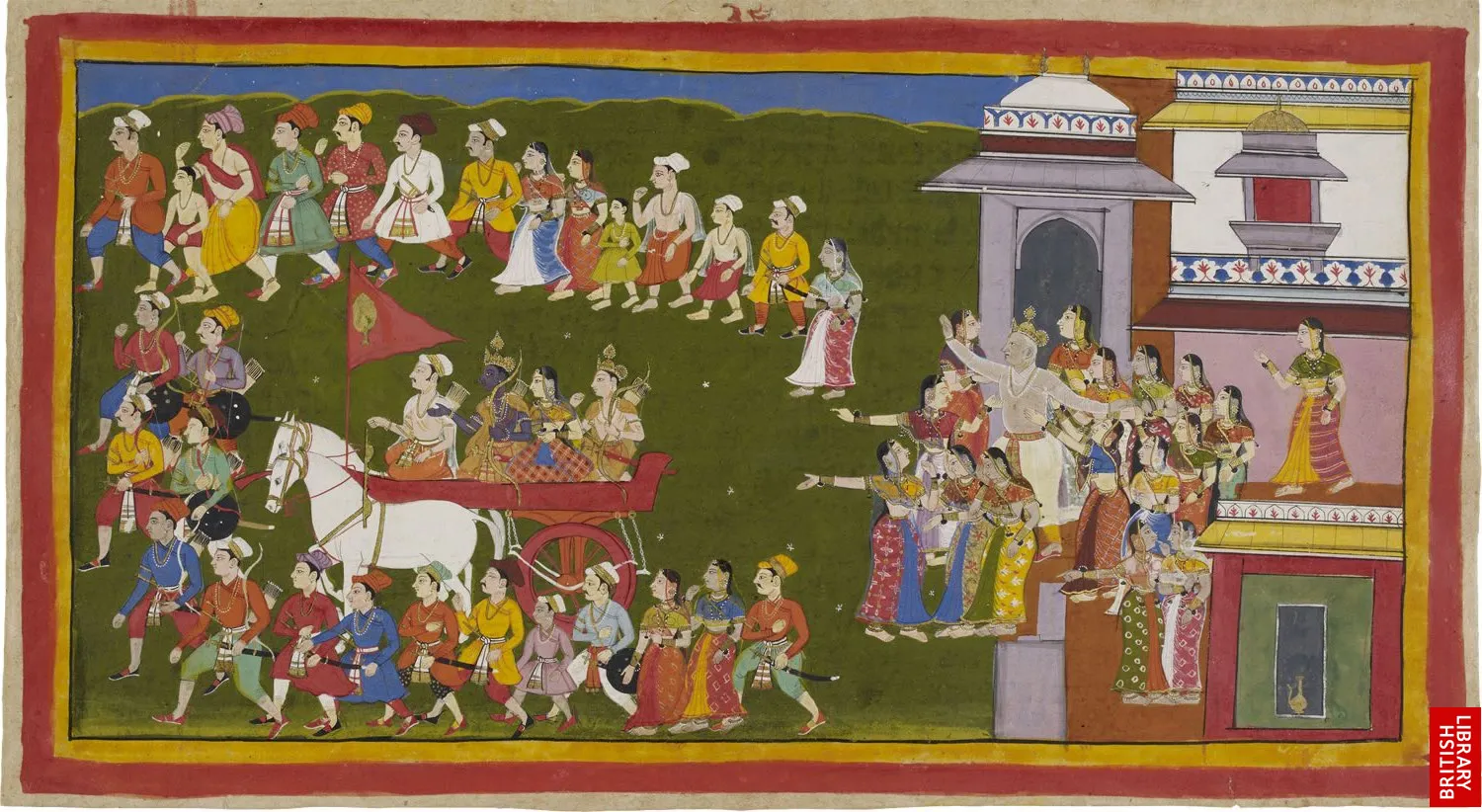
Try a small experiment. Say to yourself: The Ramayana is a myth. Notice what happens. Perhaps nothing. Perhaps you nod. Perhaps something tightens inside you. If one grows up with Rama and Sita as sacred presences rather than literary characters, the word myth can sound suspiciously like false.
Now try another sentence: The Ramayana is history. A different set of people may shift uneasily in their chairs. Already, we have learnt something useful. Not about the Ramayana, but about ourselves.
We spend enormous energy defending our points of view. We spend much less examining our viewing points: where we stand, what we are looking at, and what kind of truth we recognise from there. Points of view often pretend to be objective. Viewing points keep the viewer in the frame. They remind us that seeing is never entirely separate from the person doing the seeing. My previous essay, on Homer and Christopher Nolan’s Odyssey, explored this distinction through two storytellers separated by nearly three millennia. This time it’s home turf and considerably more combustible.
Indians find it difficult to keep the Ramayana at arm’s length. It is scripture, literature, moral instruction, childhood memory, performing art, political symbol and family inheritance. Rama and Sita inhabit temples and television serials, grandmother’s stories and public rhetoric. Hanuman appears on prayer shelves, gym walls and car dashboards with equal confidence. So what kind of truth does the Ramayana contain? Perhaps our first error is assuming there can be only one answer.
Before Truth, Ways of Seeing
Stand, imaginatively for now, before Ram Setu. A geologist sees a long chain of limestone shoals between India and Sri Lanka. Satellite imagery confirms the physical formation. A historian asks how people travelled across this region, what ancient texts say, and when associations with Rama became embedded in cultural memory. A believer sees the bridge constructed by Rama’s devoted Vanara army on its march to Lanka. A symbolic reader sees something else altogether: an impossible crossing made possible through courage, ingenuity, faith and collective effort. The landscape has not changed. The viewing point has.
Now comes the more interesting experiment. Which description did you instinctively trust, or dismiss? Your reactions reveal the languages of truth in which you are already fluent.

Literal and Symbolic Sight
We use at least two kinds of sight. Literal sight asks: Did this happen? Where? When? What evidence supports it? Symbolic sight asks: What does this reveal? Why has this image survived? What is it saying about being human? A wedding ring is metal, until it isn’t. The national flag is coloured cloth, until someone burns it. The Ganga is water, and so much more.
We move between literal and symbolic sight easily enough, until religion, politics or identity enters the room. Then things can get lively. Literal sight may approach Hanuman’s leap as a claim about physical prowess. Symbolic sight asks what happens when devotion makes perceived limits disappear. Ravana can be a ten-headed king, or he can be something far more uncomfortable. Us.
Symbolic sight does not ask us to stop thinking, but to think in another language.
Four Languages of Truth
1. Fact: What Can I Verify?
Fact is the narrowest viewing point. It asks what evidence can establish. Ayodhya exists. Sri Lanka exists. Ancient texts and manuscripts carrying Rama narratives exist. Archaeological sites exist. Facts provide common ground. Medicine, engineering, courts and public policy become dangerous when evidence becomes optional. But facts have limits. They may tell us whether something happened. They cannot always tell us why it matters. A thermometer measures fever superbly. I wouldn’t ask it about suffering.
2. History: What Can We Reconstruct?
History widens the aperture. The Sanskrit Ramayana attributed to Valmiki was not produced as a finished volume on a Tuesday afternoon. It emerged through oral and textual transmission across centuries, and scholars identify different layers within the work. Then came many more tellings. The Rama story has travelled through Jain, Buddhist, Hindu and regional traditions, across India and much of Asia, changing emphasis as it moved. Ravana changes too. Rakshasa. Scholar. Musician. Shiva devotee. Powerful monarch. Arrogant abductor. In some tellings, even a figure regarded with local sympathy or pride. History asks how these portrayals emerged, and what the changing contexts tell us about those doing the telling. This does not diminish the tradition.
3. Legend: What Do We Choose to Remember?
Legend lives closer to memory. Stories gather around historical or quasi-historical figures. Communities embellish them, localise them and sometimes domesticate them. Ravana is especially revealing here. A simple morality tale needs him to be thoroughly wicked. Cultural memory has proved less cooperative. Why remember his scholarship? His musical gifts? His devotion? His opulence? Perhaps because evil is too easy when it displays a badge marked EVIL. Ravana is more disturbing because he is so accomplished. And profoundly capable of wrongdoing. Legend reminds us that cultures do not only preserve what happened. They preserve what they need to think about.
4. Myth: What Is This Story Asking of Me?
Myth asks the most intimate question. Not: Did this happen? But: What does this reveal about being human, and about me? Ravana, brilliant, powerful and devout, yet capable of self-deception and violence, is an obvious example. But myth becomes richer when we move beyond familiar heroes, villains and verdicts into the tensions beneath them. Symbolic sight turns plot points into mirrors. It becomes a language of truth.
Dilemmas and Tensions
We know the familiar and grand Ramayana: Rama, Sita, Ravana, Hanuman, exile, abduction, war and return. But familiarity often arrives with verdicts already attached. Rama: good. Ravana: evil. Sita: virtuous. Hanuman: devoted. While broadly true, labels can prevent us from seeing the simmering tensions underneath. So let us step sideways into some less rehearsed moments.
Moral Dilemmas: When Two Rights Collide
The Ramayana is often presented as a guide to dharma. More than the binary clash between good and evil, it repeatedly shows what happens when different dharmas collide.
Rama and Dasharatha: Principle and Consequence
Dasharatha must honour the two boons he once granted Kaikeyi. Rama accepts exile to preserve his father’s word. From one viewing point, this is integrity at its highest. Change the viewing point and the consequences look harsher: a family fragments, a king dies grieving, a kingdom loses its heir, and exile eventually leads to war and destruction. We rightly admire people who keep their word. But when does fidelity to principle become blindness to consequence?
Vaali and Sugriva: Ends and Means
Rama helps Sugriva recover his kingdom, but kills Vaali from a hiding place. That the brothers are indistinguishable from each other adds delicious irony. The epic itself preserves the discomfort. The dying Vaali challenges Rama’s right to intervene and the manner of his death. Can a just end justify questionable means? Does greater power create greater licence, or greater responsibility? Can an action be strategically defensible and still leave a moral residue? These questions travel easily from forests to courtrooms, boardrooms and battlefields.
Bharata and Vibhishana: Loyalty and Conscience
Bharata refuses to profit from his mother’s wrongdoing. Vibhishana refuses to remain loyal to his brother’s unjust cause. One gives up advantage. The other gives up allegiance. Both say no to their own side. When does dissent become duty? When does crossing over cease to be betrayal and become conscience? Families, organisations, political parties and nations all need loyalty until it becomes a proxy for complicity.
Psychological Tensions: When the Story Looks Back
Moral dilemmas ask: What should I do? Psychological insight asks: What is happening inside me while I decide?
The Golden Deer and Lakshman Rekha: Desire and Boundary
The Golden Deer pulls outward. The Lakshman Rekha restrains. One is allure, while the other is boundary. The deer succeeds because it is attractive enough to override caution. Every age manufactures golden deer. Ours simply have better branding. Yet desire is not the enemy. Curiosity, aspiration and possibility enlarge life. Nor are boundaries necessarily oppressive. Some protect us. The challenge is discernment: Which desires are worth pursuing, and which merely dazzle? Which boundaries still guard, and which have become prisons? The Lakshman Rekha is a lovely example of legend entering and reshaping mythic memory: it does not appear in Valmiki’s text, but arrives through later tellings.
Hanuman and Sita: Capability and Agency
Hanuman crosses the seemingly impossible ocean after overcoming formidable trials, finds Sita and offers to carry her home. He can do it, but Sita refuses. That decision changes the viewing point. Hanuman represents extraordinary capability. Sita asserts agency. The ability to solve someone else’s problem does not automatically give us the right to do it our way. Parents know this. Leaders know it. So do partners, coaches and consultants. Can I offer relief without taking over someone else’s journey? Can I remain supportive when they reject the solution that seems obvious to me?
Kaikeyi and Manthara: Fear and Perception
Kaikeyi initially welcomes Rama’s coronation. Then Manthara changes her viewing point. Good news turns into a threat. Rama’s rise equals Bharata’s loss. Fear rearranges the mental furniture. Nothing outside has yet changed. The story inside has. We rarely experience ourselves as suddenly becoming unreasonable or harsh. Fear alters the narrative. Suspicion gathers evidence. Hurt recruits memory. Status anxiety turns another person’s success into our diminishment. Soon, what once seemed unthinkable begins to feel necessary.
What if we ask: Who is my Manthara? What in me is ready to believe her? Why?
The Epic Never Ends
Look around. The Ramayana’s frictions reappear wherever people divide the world into us and them: in war, politics, ideology, organisations, families and relationships. Every tribe prefers to imagine itself as Rama and the other side as Ravana. The battlefields shrink too. A leader protects a colleague when challenge is required. A family silences the truth-teller. An algorithm reconfirms what we already believe. Shift the viewing point and the ancient epic appears in an unexpected place: the mirror.
Moving Viewing Points Without Losing One’s Centre
How? Try the same exercise on the great stories you have inherited. When facing a factual claim, ask for evidence. When encountering history, ask about sources and what may be absent. When meeting legend, ask what is being chosen to remember, embroider or forget. When entering myth, ask the more dangerous question: What does this story reveal about me/us?
Back at Ram Setu
The geological formation is fact. What evidence tells us about its past belongs to history. The attached stories comprise legend. Myth evokes faith, cooperation and crossing the impossible. Same landscape, four languages of truth. The bridge collapses when one claims the entire territory for itself. Wisdom lies not in choosing, but in knowing which language we are speaking, which one another person is speaking, and when a shift will help.
The Ramayana has survived because different generations heard different truths in it. Perhaps its latest invitation is to ask: What truths am I unwilling to bear because I have forgotten how to listen in another language?
Join the conversation
Vijay Bhat
Founder-Director | Roots & Wings Consulting Services
Vijay describes himself as a wanderer, a dabbler, a student, a seeker, a Thriver, and a Sherpa.
His purpose is to help people awaken, heal, grow, and thrive through life’s transitions, big or small.
Overlapping careers spanning 25 years in advertising at Ogilvy and Mather, 22 years in leadership consulting through Roots and Wings, and 9 years in cancer coaching with Cancer Awakens (do the math!) gave him the opportunity to live and work across cultures and continents. Along the way, he earned some successes and more than a few scars.
In 2001, Vijay was diagnosed with colon cancer. He has been a cancer-thriver ever since. “Cancer healed me,” he says. That experience led him to co-author My Cancer Is Me: The Journey from Illness to Wholeness and to pioneer Cancer Coaching in India.
Today, Vijay serves as an Independent Director on a corporate board and as an Advisory Board member to two non profits. He is a sought-after keynote speaker on leadership, stress and wellbeing, and cancer.
His superpower is clarity of thought and expression, rooted in relentless curiosity. He keenly explores three domains: Nature, Culture, and Self. After engaging deeply with many philosophies, he has settled on Absurdism: Life is a circus. Astonishing and amusing, all at once.
In his sunset years, Vijay practises meaningful mischief with people who can think deeply and laugh easily at themselves.
Beyond the noise is the signal.
FF Insights: Sharpen your edge, Monday–Friday.
FF Life: Culture, ideas and perspectives you won't find elsewhere — Saturday.

Founding Fuel is sustained by readers who value depth, context, and independent thinking.
If this essay helped you think more clearly, you may choose to support our work.

Founding Fuel is sustained by readers who value depth, context, and independent thinking.
If this essay helped you think more clearly, you may choose to support our work.
Loading comments...


Readers also liked

·FF Life
The Happiness We Keep Postponing
A reflection on joy, and why the ordinary day may be enough
HC

Haresh Chawla
Investor | Entrepreneur
The Happiness We Keep Postponing
A reflection on joy, and why the ordinary day may be enough
Investor | Entrepreneur

·Leadership & Organisation
The Blind Spots of India Inc
Disability inclusion, leadership imagination, and the limits of intent
SS

NJ
Subhashis Sinha & Nikunj Kumar Jain
The Blind Spots of India Inc
Disability inclusion, leadership imagination, and the limits of intent
Subhashis Sinha & Nikunj Kumar Jain

·Artificial Intelligence
India’s AI Gambit: The Choices That Will Define Power
Speed is not strategy. The real battle is over sovereignty, science and state capacity
FF

Founding Fuel
India’s AI Gambit: The Choices That Will Define Power
Speed is not strategy. The real battle is over sovereignty, science and state capacity
Explore more
Dive into other themes from our network.