The War in Iran: The Illusion of Decisive Force
One month in, the limits of conventional military power are being laid bare. As a “dual chokehold” on global energy flows emerges, the old security umbrella of the Gulf states is being dismantled. It is forcing a permanent re-pricing of both regional and global risk.
30 March 2026· 10 min read
TL;DR
The ongoing conflict in Iran fundamentally re-prices global risk, exposing the limits of conventional military power against a resilient, asymmetric adversary. One month in, Iran's layered defenses and proxy networks effectively defy superior force, ensuring degradation without collapse. Crucially, a "dual chokehold" on global energy via the Straits of Hormuz and Bab el-Mandeb portends sustained supply chain disruption and market volatility. This isn't a transient crisis but a permanent geopolitical recalibration and persistent long-term instability.
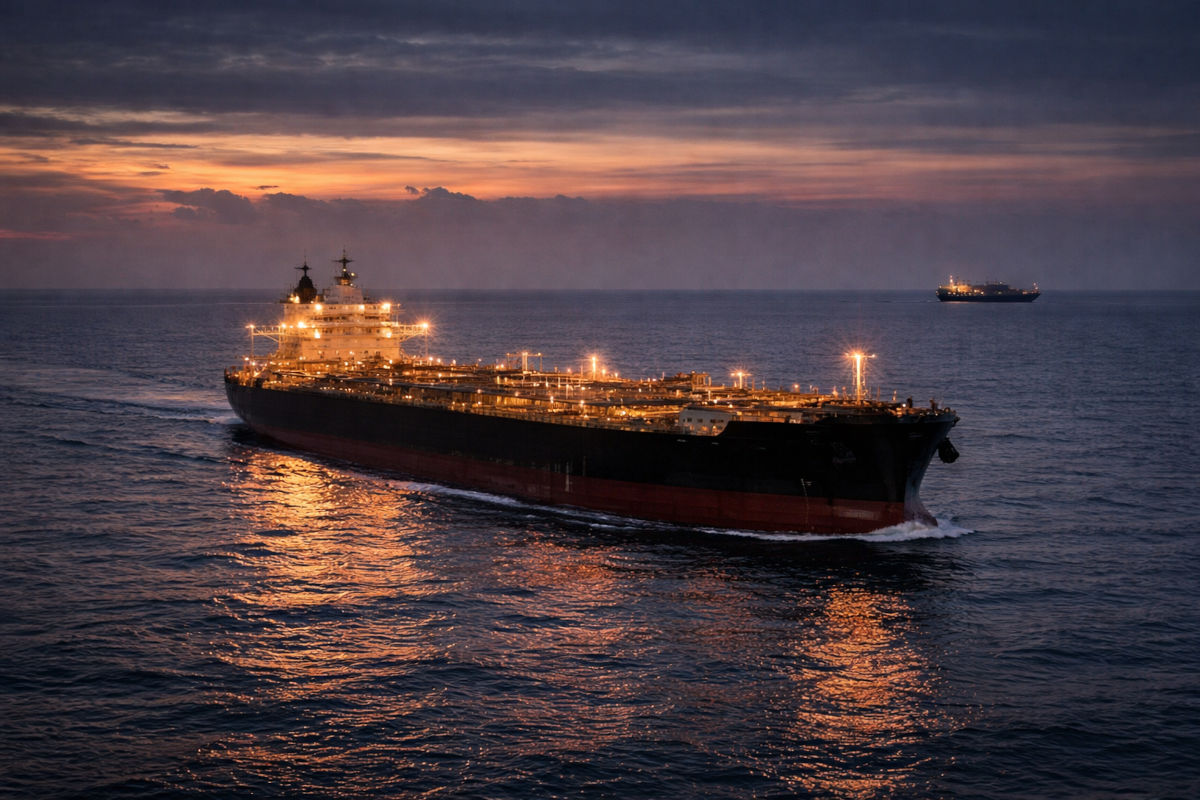
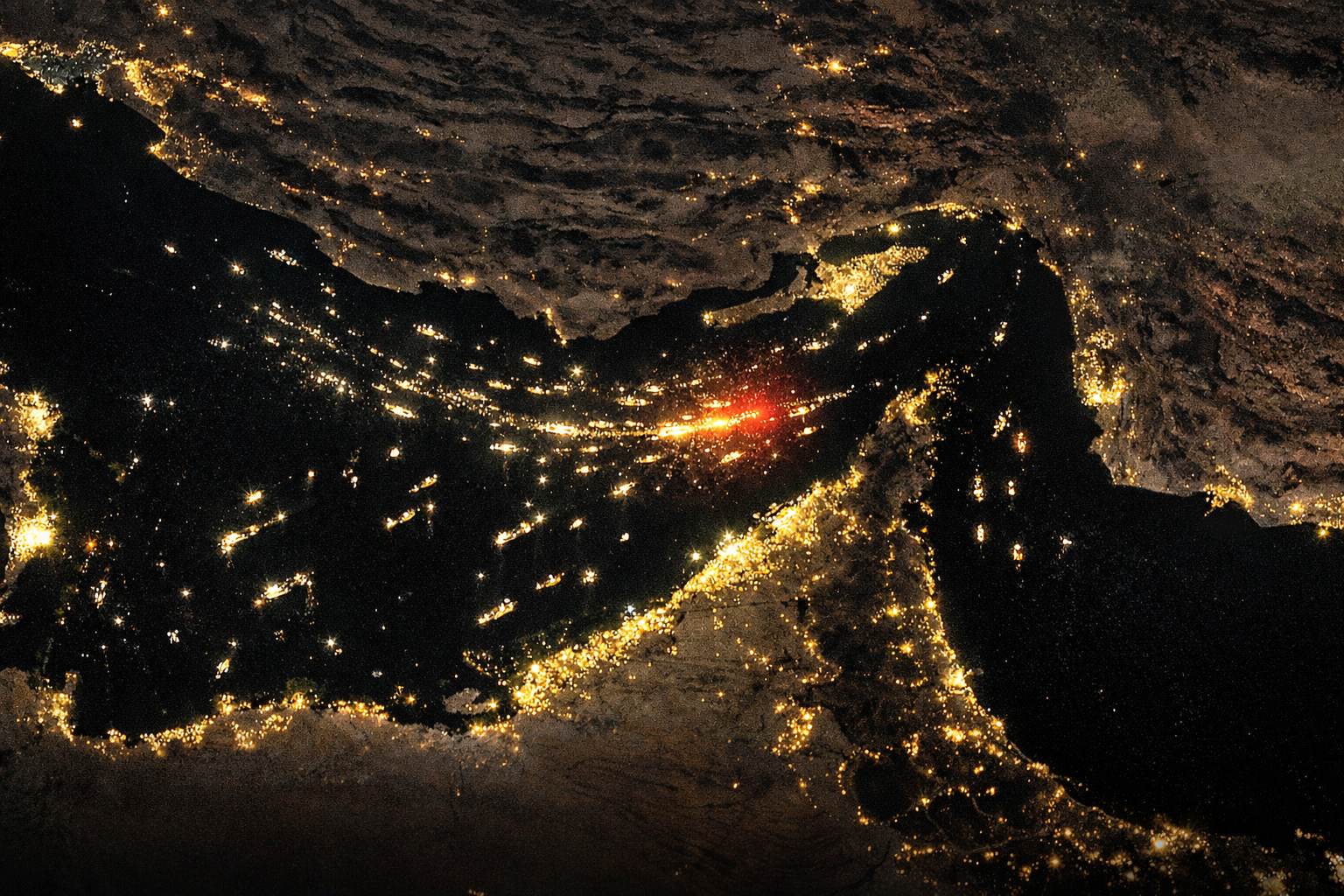
One month into the war between the US, Israel, and Iran, the conflict has entered a volatile phase defined less by battlefield breakthroughs than by systemic disruption and narrowing options. Even as Israeli strikes intensify deep inside Tehran and Iran maintains retaliatory strikes across the region, Washington continues to reinforce troop deployments while weighing ground options. Simultaneously, the Houthis have activated the Red Sea axis, raising the prospect of a “dual chokehold” on global energy flows through both the Strait of Hormuz and the Bab el-Mandeb Strait.
The conflict has evolved into a complex collision of theocratic ideology, regime resilience, and persistent global economic risk. While dismantling the Islamic Revolutionary Guard Corps (IRGC) regime and securing the Strait remain the stated goals, the strategy to achieve them remains opaque, and every pathway carries significant risk. A “Venezuela-style” settlement—one that preserves the core of the IRGC and the Ayatollah system—would not bring stability. Instead, Iran would likely institutionalise wartime tactics into peacetime leverage, managing the Strait of Hormuz not as a closed chokepoint, but as an Iran-controlled gateway.
Crucially, the imbalance in capabilities between the two sides is not proving decisive. The US retains overwhelming superiority across air, maritime, and precision strike domains, and Israel continues high-tempo deep-strike operations into Tehran and Lebanon. Yet both face diminishing returns. Israel’s air defense network is showing signs of strain under saturation attacks, with interceptor depletion and sensor degradation exposing vital vulnerabilities. For its part, Washington has discovered that network-centric warfare is only as resilient as its most exposed physical nodes—radars, forward bases, and logistics hubs—which Iran has targeted with increasing effectiveness.
Degradation Without Collapse
By conventional metrics, Iran is degraded. Its leadership has been partially decimated, its air defenses suppressed, and its missile launch rates reduced. Yet degradation has not translated into collapse. Iran’s posture now blends limited ballistic capability with drones, proxies, and maritime coercion. Its layered missile doctrine—pairing older systems with maneuverable re-entry vehicles—demonstrates how technological gaps can be offset by volume and cost asymmetry. More critically, Iran is an Islamic Republic, anchored by the IRGC. It has proven resilient, absorbing leadership losses without systemic failure.
At the same time, the nuclear dimension has moved to the center of the war’s trajectory. A degraded but unconstrained Iran is likely to retain the capability to weaponise beyond acceptable threat thresholds. Technical skills can be maintained; execution can simply be postponed. This ensures that instability will persist. Israeli or US attempts to eliminate this capability through strikes on nuclear infrastructure risk an escalation beyond current bounds. Ultimately, unless the regime is significantly dismantled, any settlement will leave Iran determined to rebuild.
Israel’s Existential Risk
For Israel, this implies a permanent threat environment marked by lower-intensity but unpredictable missile and drone attacks. Hezbollah’s continued operations, militia activity in Iraq, and Houthi involvement reflect Tehran’s networked strategy. This creates a multi-front challenge for Israel that risks strategic exhaustion rather than outright defeat. Interceptor depletion, high operational tempo, and the need to manage simultaneous theaters impose limits that are not immediately visible in battlefield metrics. Any settlement that leaves the IRGC system intact implies continuing existential pressure, increasing the likelihood of a prolonged, low-intensity conflict widening across Lebanon and Syria.
The ideological dimension reinforces this. The IRGC’s fusion of theology and military doctrine sharply limits the room for compromise. For Israel, deterrence becomes an existential necessity, making negotiated outcomes with IRGC elements in place more likely to institutionalise confrontation than resolve it.
The Risk of Fragmentation
Attempts at a settlement with a fractured or partially reconstituted regime emerging from within the IRGC system introduce a different set of risks. The assumption that sustained military pressure will trigger regime collapse underestimates the extent to which the IRGC is embedded in the Iranian economy and society. A “rejigged” center in Tehran may exert only limited control over its own periphery.
A weaker center in Tehran could produce a more volatile regional environment.
Fragmentation would reduce Tehran’s central control but increase regional unpredictability. Commanders could retain authority over missile units and proxy networks beyond the reach of a central government. Managing proxies like Hezbollah or Iraqi militias requires a coherence that a fragmented leadership would struggle to maintain, raising the risk of unintended escalation. A weaker center in Tehran could thus produce a more volatile regional environment.
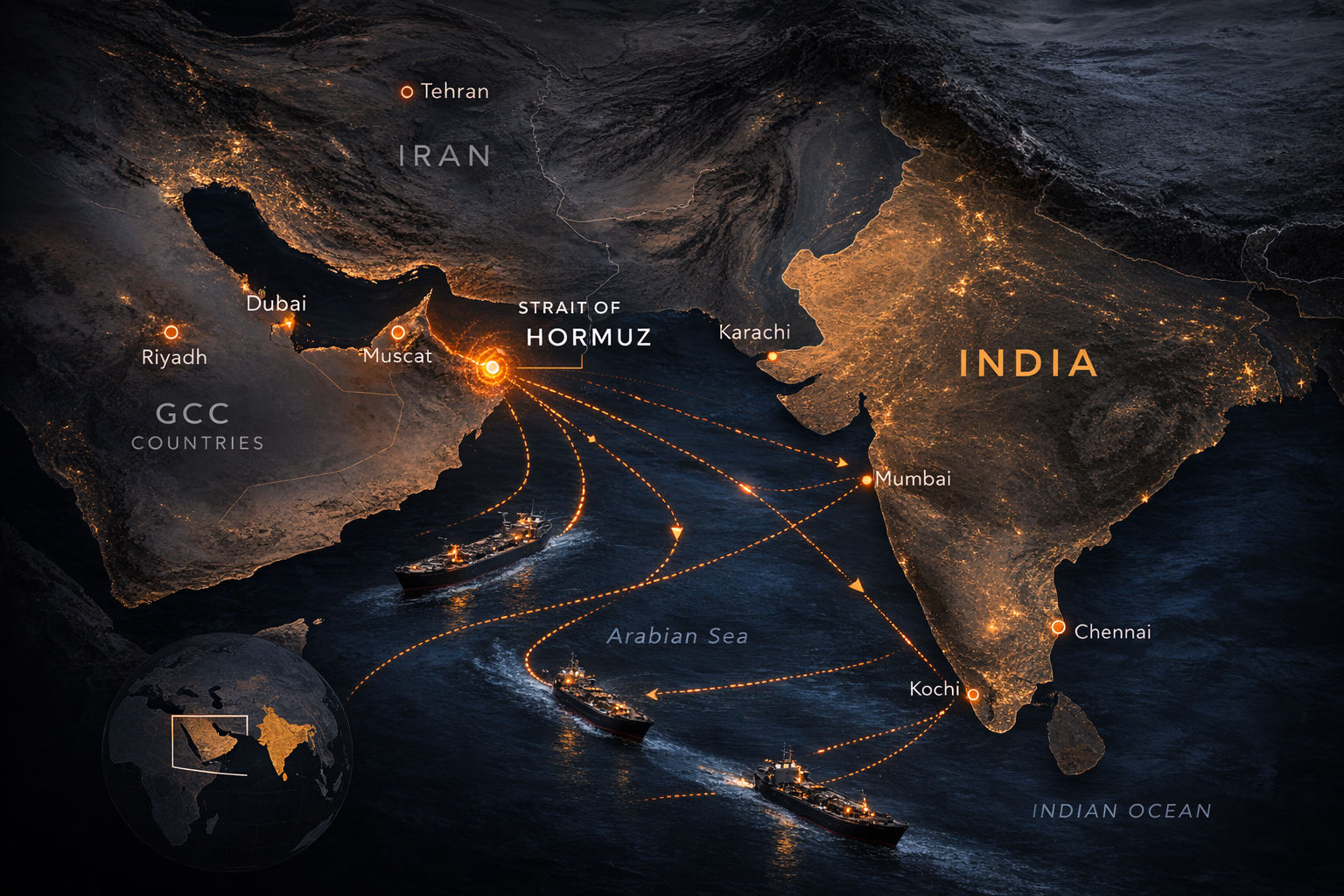
The entry of the Houthis transforms this into a “dual-chokepoint” crisis. Their strikes on Israel are primarily signaling actions, but an escalation toward the Bab el-Mandeb Strait, which connects the Red Sea to the Gulf of Aden and the Indian Ocean, would have systemic consequences. If Iran constrains Hormuz while the Houthis disrupt Red Sea traffic, the result is a structural shift in global trade vulnerability. Together, these chokepoints account for over a third of global energy and maritime flows; their simultaneous disruption represents a new form of maritime coercion with massive global implications.
GCC’S Stability Repriced
For the Gulf Cooperation Council (GCC) states, the implications are structural. Iran has demonstrated the capacity to target critical infrastructure—energy facilities, desalination plants, and logistics nodes—forcing Gulf economies to internalise risks previously mitigated by the American security umbrella.
Recent strikes have already altered global perceptions of the Gulf. It is no longer viewed as a stable anchor in energy markets, but as a region where disruption is a recurring variable. This is visible in higher insurance costs, more volatile sovereign risk assessments, and greater caution in long-term capital allocation.
Recent strikes have already altered global perceptions of the Gulf. It is no longer viewed as a stable anchor in energy markets.
Financial risk is amplified by this prolonged uncertainty. Even without catastrophic disruption, repeated incidents can gradually redirect capital flows. Sectors such as logistics, aviation, and financial services are particularly sensitive. This poses a structural challenge to diversification strategies, such as Saudi Arabia’s Vision 2030, which depend on sustained perceptions of stability.
Dual Threats
The political dimension is equally significant. Iran’s proxy networks have re-emerged as both external and internal threats. Israel and the Gulf states face a dual-layered challenge: simultaneous cross-border attacks and covert domestic activity. The activation of these networks would strain security systems and carry longer-term governance and social implications.
Investment risk extends beyond immediate losses. If the Gulf is perceived as permanently and structurally exposed, firms may shift capital toward alternative hubs. This erosion of competitive positioning could be difficult for economies like the UAE that have positioned themselves as global logistics centers. Consequently, GCC sovereign wealth funds may redirect resources inward to mitigate the extent of damage to their infrastructure from the war and the need to build resilient defence and economic security.
This could have an impact on global capital flows. The GCC countries have in recent years been among the largest outward FDI investors globally. Doubts over the Abraham Accords and trade routes like the India–Middle East–Europe Economic Corridor (IMEC) would inevitably deepen.
The fundamental question now is whether the US remains a security provider or has become a source of risk.
Overlaying these trends is a deeper recalibration. Gulf states are increasingly hedging between the US and China. The fundamental question now is whether the US remains a security provider or has become a source of risk. Perceptions that Washington has exposed the region to danger without commensurate protection are eroding confidence in longstanding guarantees, pushing Gulf capitals toward a more pragmatic, multi-aligned posture.
The Limits of US Escalation
Against this backdrop, the military options available to Donald Trump reflect both opportunity and constraint. The islands of Qeshm, Larak, Abu Musa, and Kharg represent the strategic nodes of the Strait of Hormuz. Targeting Qeshm and Larak aims to degrade Iran’s maritime denial capabilities but exposes US forces to asymmetric retaliation from the coastline.
Kharg Island, Iran’s primary oil export hub, represents a critical economic target. Neutralising it aligns with a coercive economic strategy but carries the highest escalation risk. Iran would likely respond with intensified attacks on Gulf infrastructure and US assets. Furthermore, holding Kharg would require a prolonged ground presence, undermining the premise of a limited campaign.
Domestic political constraints—war fatigue and fiscal pressures—limit the scope for sustained US escalation. This creates a structural asymmetry: while US military capability is overwhelming, its willingness to sustain a prolonged conflict is not open-ended—a dynamic Iran is likely to exploit through attrition and asymmetry.
Limited Diplomatic Options
Diplomatic efforts centered in Pakistan, Turkiye, and Egypt reflect attempts to find an off-ramp. Yet the absence of visible Iranian leadership engagement raises doubts about the substance of these efforts. Pakistan’s own constraints such as border vulnerabilities, internal instability, and dependence on Gulf financing limit its ability to act as an effective broker. If pressured to use its territory for attacks on the Strait, Pakistan would lose all credibility with Tehran. Incidentally a spokesman for Iran’s foreign ministry has denied any talks with Pakistan. If this means that any talks are being conducted without the buy-in of the regime, the danger of medium-to-long term fragmentation in Iran stays high.
Turkiye and Egypt bring diplomatic weight, but the core challenge remains: any settlement must reconcile US demands to curb nuclear programs with Iran’s insistence on strategic autonomy. Without convergence, diplomacy is likely to produce only temporary de-escalation rather than durable peace.
Notably, Russia remains peripheral. Higher energy prices and Western distraction serve Moscow’s interests without requiring its direct involvement. China, meanwhile, is pursuing a long-term strategy to maximise advantage while limiting risk. Beijing’s priority is stability in trade routes, yet it remains reluctant to assume a security role it cannot sustain. As the US becomes associated with volatility, Beijing’s emphasis on predictability may grow more attractive to regional actors.
However, on March 30, China said it supports the Pakistan-led peace initiative. China’s foreign ministry spokesperson, Mao Ning, stated: “We commend Pakistan’s mediation effort for deescalation and support Pakistan in continuing to play its role as mediator. We stand ready to enhance communication and coordination with Pakistan and others to jointly work for a ceasefire and peace and stability in the region.”
So far, this signals no direct intervention with Iran. But China’s covert support could be significant. Beijing had played a vital backchannel role in 2015 when President Obama signed the Joint Comprehensive Plan of Action (JCPOA) to limit Iran’s nuclear ambitions. The agreement was later repudiated by Trump in 2018, a move that prompted Iran to resume efforts to develop nuclear weapons.
What About the War?
The broader consequence is a shift in the structure of the global order. The US retains unmatched military capability, but its ability to translate that power into stability is increasingly questioned. Iran has demonstrated that resilience and asymmetry can offset conventional weakness.
Ultimately, the war lacks a clearly defined end-state. Trump posted on his Truth Social account on March 30 that if a deal with Iran isn’t reached quickly, the US would “completely obliterate” Iran’s electric generating plants, oil wells, Kharg Island, and possibly desalination plants. It’s unclear if this is just Trumpian rhetoric. Or whether the American President will use destruction as a means to declare victory and exit the war.
If such destruction occurs, Iranian anger will only blow back across Israel, the US and the wider region. Attempts at systemic destruction of the sort that Trump is hinting at have failed through history, whether in Britain in the 1940s, or Vietnam in the 1960s, or Afghanistan in the 1980s or the 2000s.
Afghanistan, a state without any significant industry, is still a fairly formidable military force in its region.
For Washington, success oscillates between coercion and regime transformation. For Israel, it lies in degrading a long-term threat without becoming trapped in strategic exhaustion. For Iran, survival itself constitutes victory. The war’s trajectory will depend less on a “decisive” battlefield outcome than on whether these competing objectives can be managed without triggering a total systemic fracture.

Founding Fuel is sustained by readers who value depth, context, and independent thinking.
If this essay helped you think more clearly, you may choose to support our work.

Founding Fuel is sustained by readers who value depth, context, and independent thinking.
If this essay helped you think more clearly, you may choose to support our work.
Join the conversation
Vivek Y. Kelkar
Researcher, Analyst & Columnist on Geo-economics, Geopolitics and Sustainability
Vivek Y. Kelkar is a researcher, analyst, and columnist working at the intersection of geo-economics, geopolitics, and sustainability. His work explores global power shifts, strategy, trade transitions, and the geopolitics of climate-related systemic risk—integrating political economy with emerging trends across China, Southeast Asia, and the Middle East. He also writes for Moneycontrol, Modern Diplomat, Asia Times, and The Spectator.
Vivek brings extensive global management experience in M&A, strategy, brand and stakeholder management, and sustainability, alongside deep involvement in media.
He is a Visiting Faculty at IIM-Indore, and has delivered conference papers and participated in expert panels with institutions like the Institute of Chinese Studies, India, besides moderating at online forums.
Vivek holds an MA in International Political Economy from the University of Sheffield and an MBA from Ashridge Business School.
Beyond the noise is the signal.
FF Insights: Sharpen your edge, Monday–Friday.
FF Life: Culture, ideas and perspectives you won't find elsewhere — Saturday.
Loading comments...

Readers also liked

·FF Life
A War India Didn’t Choose—and a Market It Can’t Escape
From Hormuz to Dalal Street, a distant conflict is quietly reshaping risk for Indian investors—and exposing the limits of “India-only” portfolios
AD

Anindya Dutta
Founder | Two Roads and author
A War India Didn’t Choose—and a Market It Can’t Escape
From Hormuz to Dalal Street, a distant conflict is quietly reshaping risk for Indian investors—and exposing the limits of “India-only” portfolios
Founder | Two Roads and author
·Economy, Policy & Society
The US–Israel War on Iran: The Risks to India’s Strategic Hedging
Energy dependence, remittance flows and trade corridors reveal how deeply India’s economy is tied to stability in West Asia. Part II of a two-part series.
VK

Vivek Y. Kelkar
Researcher, Analyst & Columnist on Geo-economics, Geopolitics and Sustainability
The US–Israel War on Iran: The Risks to India’s Strategic Hedging
Energy dependence, remittance flows and trade corridors reveal how deeply India’s economy is tied to stability in West Asia. Part II of a two-part series.
Researcher, Analyst & Columnist on Geo-economics, Geopolitics and Sustainability
·Economy, Policy & Society
The US–Israel War on Iran: Energy, Power and Regional Disruption
Energy chokepoints, proxy escalation and great-power recalibration are reshaping the Gulf and unsettling the global order. Part I of a two-part series.
VK
Vivek Y. Kelkar
Researcher, Analyst & Columnist on Geo-economics, Geopolitics and Sustainability
The US–Israel War on Iran: Energy, Power and Regional Disruption
Energy chokepoints, proxy escalation and great-power recalibration are reshaping the Gulf and unsettling the global order. Part I of a two-part series.
Researcher, Analyst & Columnist on Geo-economics, Geopolitics and Sustainability
Explore more
Dive into other themes from our network.