
Those who see problems as opportunities
This Week: Frugal innovation and doing better with less, fixing affordable housing, what ails research in B-schools, and the world in 2018
15 January 2018· 2 min read
TL;DR
This collection offers compelling insights for business leaders navigating a dynamic world. It champions 'frugal innovation,' demonstrating how scarcity can be a powerful catalyst for breakthroughs, enabling organizations to "do better with less" and gain a competitive edge. The content highlights how agile entrepreneurs, with strategic support, are uniquely positioned to solve complex societal challenges like affordable housing. Furthermore, it critically examines the need for academic research to evolve, delivering industry-relevant and actionable insights. By embracing a mindset that transforms problems into opportunities and staying abreast of global trends, leaders can foster creativity, drive impactful solutions, and build resilient enterprises that enrich both business and community.

Dear friend,
When smart entrepreneurs and inventors look at the scarcities and problems their city, nation or the world is faced with, they see opportunities. In their minds and hands those very constraints spark some of the most interesting—and inspiring—breakthroughs that enrich not just the enterprise but entire communities. The speakers at the session, ‘Frugal Innovation: How to Do Better with Less’—organised by the Confederation of Indian Industry—explore some of these stories in frugal engineering and how India could take leadership in this area. The roughly one-hour-forty-minute session is well worth the time!
In much the same vein Indrajit Gupta dissects why affordable housing remains a huge challenge in India and how small, unbranded real estate entrepreneurs might be better placed to solve the issues.
This is also where research coming out of B-schools, especially in areas that pose critical challenges to the industry and the entrepreneurial experiments being tried out, can be useful. Do read Harsh Vardhan’s incisive article on what ails the research culture in Indian B-schools and what they can do to overhaul their business model to become more relevant for industry.
And finally, take a peek into what will move the world in 2018—D Shivakumar extracts some key insights from The Economist’s report.
Happy reading!
Sveta Basraon
On behalf of Team Founding Fuel
Featured Stories
The alchemy that transforms adversity into opportunity
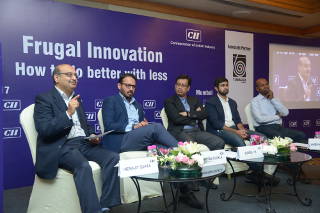
The very scarcities of resources India faces gives it a natural advantage in taking leadership in frugal engineering and rewriting the playbook on innovation. In a session hosted by CII, Gopichand Katragadda, Navi Radjou, Shantam Shukla, Suneel TS and Vaibhav Chhabra discuss how. (Play Time: 105 mins)
The trends to watch in 2018
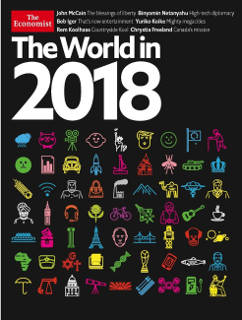
D Shivakumar pulls out insights into the forces that will shape the world, from The Economist report, The World in 2018. (Read Time: 10 mins)
How to solve the affordable housing conundrum

[By mastersenaiper under Creative Commons]
Smart entrepreneurs are best placed to solve the affordable housing crisis. But they need the government’s support, says Indrajit Gupta. (Read Time: 4 mins)
How business schools in India have killed off research

[By Angela Yuriko Smith under Creative Commons]
New, bold and unconventional approaches are needed to resuscitate the research culture, says Harsh Vardhan. (Read Time: 8 mins)
What We Are Reading
What the future of work will mean for jobs, skills, and wages
In an era marked by rapid advances in automation and artificial intelligence, new research assesses the jobs lost and jobs gained under different scenarios through 2030.`
From Our Archives
Life lessons from Kris Gopalakrishnan
[Photograph courtesy Mint]
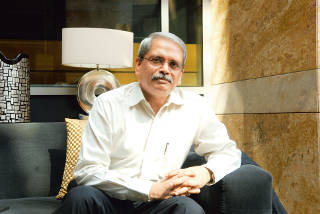
[Podcast] The co-founder of Infosys Technologies and founder of Axilor Ventures opens up in an intensely personal conversation with Charles Assisi on the various stages of life.
Moderate constraints actually boost creativity. Here's why

[By reneeellisdesigns under Creative Commons]
The popular belief is creative minds work best in unstructured, open-ended environments. But some research suggests that the opposite might be true, says Charles Assisi.
Join the conversation
Founding Fuel aims to create the new playbook of entrepreneurship. Think of us as a hub for entrepreneurs- the go-to place for ideas, insights, practices and wisdom essential to build the enterprise of tomorrow. It is co-founded by veteran journalists Indrajit Gupta and Charles Assisi, along with CS Swaminathan, the former president of Pearson's online learning venture.
Beyond the noise is the signal.
FF Insights: Sharpen your edge, Monday–Friday.
FF Life: Culture, ideas and perspectives you won't find elsewhere — Saturday.

Founding Fuel is sustained by readers who value depth, context, and independent thinking.
If this essay helped you think more clearly, you may choose to support our work.

Founding Fuel is sustained by readers who value depth, context, and independent thinking.
If this essay helped you think more clearly, you may choose to support our work.
Loading comments...




Readers also liked

·Entrepreneurship, Startups & Innovation
Speed and critics vs. velocity and the moon
Critics celebrated Team Indus’ for not making it to the moon. But that is the nature of critics. Those who can imagine and have muscle, continue to aim for the moon
CA

Charles Assisi
Co-founder and Director | Founding Fuel
Speed and critics vs. velocity and the moon
Critics celebrated Team Indus’ for not making it to the moon. But that is the nature of critics. Those who can imagine and have muscle, continue to aim for the moon
Co-founder and Director | Founding Fuel

·Entrepreneurship, Startups & Innovation
Two questions that led to an innovative device to prevent blindness
Who is my product for? What is my real goal? A relentless focus on these two questions allowed Forus Health to develop a low-cost, sturdy device to detect preventable blindness. This extract from Soum Paul’s book ‘Flight of the Unicorns’ tells the founders’ story
SP

Soum Paul
Entrepreneur | Film-maker and writer
Two questions that led to an innovative device to prevent blindness
Who is my product for? What is my real goal? A relentless focus on these two questions allowed Forus Health to develop a low-cost, sturdy device to detect preventable blindness. This extract from Soum Paul’s book ‘Flight of the Unicorns’ tells the founders’ story
Entrepreneur | Film-maker and writer

·Entrepreneurship, Startups & Innovation
Never Mind Online. Come Offline
It's too early to write offline retailers away. There is a lot going in their favour. But the winners in this battle will be those who integrate online and offline experiences for their consumers.
HC

Haresh Chawla
Investor | Entrepreneur
Never Mind Online. Come Offline
It's too early to write offline retailers away. There is a lot going in their favour. But the winners in this battle will be those who integrate online and offline experiences for their consumers.
Investor | Entrepreneur
Explore more
Dive into other themes from our network.