
Why Garfield Sobers Still Defines Cricketing Greatness
The six sixes made Sir Garfield Sobers famous. They barely explain why those who watched, played with and knew him still speak of him with such awe.
20 July 2026· 7 min read
TL;DR
Sir Garfield Sobers’ enduring cricketing legacy, extending far beyond his celebrated six sixes, offers profound insights for today’s business leaders. He embodied true greatness by prioritizing the love of the game and purposeful action over personal records. His unparalleled versatility—excelling as a batsman, bowler, and captain—exemplifies multi-faceted skill development and adaptability crucial in dynamic environments. Coupled with his resilient journey and team-first humility, Sobers demonstrates that genuine leadership transcends fleeting achievements. Leaders can draw inspiration to cultivate diverse talents, prioritize passion over metrics, and define success through enduring impact rather than transient headlines, fostering a culture of profound, lasting excellence.
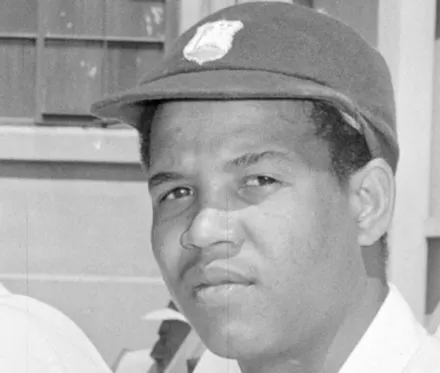
31 August 1968. St Helen's Ground, Swansea. Malcolm Nash, a Welsh medium-pacer, decides to try something different, switching from seam to slow left-arm. At the crease is Garry Sobers, who knows Nottinghamshire need quick runs before declaring.
Six balls later, Nash has, entirely unwillingly, become a household name. By despatching him for six sixes in a single over for the first time in first-class cricketing history, Sobers has ensured that posterity will always recall their names in the same breath, Nash's perhaps a bit less kindly.
Afterward, Sobers is cornered in the clubhouse bar by Glamorgan committee members wanting to relive every shot. He smiles politely, turns to his team and says: "Come on, lads, let us go back to the old tavern." John Parkin, who spends the most exhilarating over of his life looking on in awe from the non-striker's end, puts it simply years later: "Garry Sobers was not interested in world records, he was just interested in playing. That to me is the greatness of the man."
Sir Garfield Sobers passed on this week in Barbados, a few days shy of 90. He wouldn't have minded getting out early. He never did. For Sobers it was always about enjoying his time out in the middle, never the time he spent there, or the headlines.
It is inevitable that the six sixes will be the clip replayed on every news bulletin in our six-hitting-obsessed age. Yet, in a strange way, it is also the least remarkable thing about him, as those of us who grew up watching and listening to his exploits know.
To understand why, it helps to go back to where it all began.
Where Greatness Began
Sir Garfield Sobers was born in 1936 in St Michael, Barbados, one of six surviving children. His father, Shamont, worked on Canadian merchant navy ships that ferried supplies through waters patrolled by German U-boats. In January 1942, Sobers was five years old, sitting in the family home, when a messenger arrived to say his father's ship, The Lady Hawkins, had been torpedoed. There were survivors, the messenger informed the family. So for some time his mother Thelma held onto hope. Then the weeks passed, and it became clear that Sobers Sr. was never coming home.
As his mother grew busier finding the means to keep her family together, the boys ran free. Sobers grew up playing cricket with a tennis ball dyed red to look like the real thing, on a road where hitting the neighbour's wooden house on the full got you out and hitting it on the bounce didn't. Just like in the lanes off Shivaji Park, where generations of Mumbai batters learned to play straight so the neighbours' windows would not crack, Sobers learned control early on the streets of Barbados because he had no choice.
But it wasn't Sobers' batting that first drew attention to his talents. A groundsman at his local club, a man named Briggs Grandison, noticed the boy could bowl accurately and pointed him out to a West Indies international, Dennis Atkinson, who used to put a shilling on the stumps and let Sobers keep it if he knocked it off. A shilling was worth more than a week's lunch money.
"My main object was to bowl well enough to be recognised," Sobers wrote later. It worked. He made his first-class debut at 16 and his Test debut at 17.
The Cricketer Who Could Do Everything
By the time he retired in 1974, Sobers had played 93 Tests for West Indies, scored 8,032 runs at an average of 57.78, and taken 235 wickets at 34.03, a combination of runs and wickets no one has matched since. He captained his country for seven years and was knighted in 1975 while still playing.
Sunil Gavaskar's tribute this week captured what the numbers never could. "When we talk about all-rounders today, we often look at players who can balance two disciplines," Gavaskar wrote. "But Sir Garry? He was a master of five. He could bat like a dream, bowl fast-medium with the new ball, switch seamlessly to orthodox left-arm spin, bowl wrist spin, and field like a panther at short leg or in the slips."
Don Bradman, who did not hand out praise loosely, called him "unquestionably the best cricketer I ever set eyes on," and rated Sobers' 254 for the Rest of the World against Australia in 1971, made at 35 and past his physical peak, the best innings he had ever witnessed. Dennis Lillee, who bowled at him that day as a 21-year-old, remembers it as clearly now as he did then: "What do you do when a man is that good and in that good form? Remember, this is Garry at the end of his career."
Garry Sobers was not interested in world records, he was just interested in playing. That to me is the greatness of the man.
But admiration alone doesn't explain why batsmen and bowlers alike spoke of him with such awe.
What separated him was not just talent but the sheer precision of the machinery underneath it. Mark Nicholas once asked him how early in a ball's flight he needed to react. Sobers' answer was one no cricketing manual can capture:
"From the exact moment it leaves the hand. If the release is behind the bowler's head, it's pitched up; alongside his head, it's a good length; in front of his head, it's short. Simple."
His basic principle, Nicholas wrote, was to play back to fast bowling and forward to slow, and the more the ball moved, the closer he seemed to get to its exact centre. Most players see a blur a few yards away and do their best. Sobers saw a geometry problem and solved it before the ball had travelled half the pitch.
Yet those who knew him best remember something else just as vividly.
The Measure of the Man
What is striking about the tributes that have poured in this week—and indeed over the decades—is how few dwell on Sobers' batting or bowling. Instead, famous and obscure alike seem to carry a small, intensely personal memory of his generosity with time, advice or encouragement.
In the early 1970s, a young Indian left-arm spinner named Dilip Doshi was trying to break into county cricket, playing whatever trial matches he could get. In one of them, a second-eleven fixture for Nottinghamshire, Doshi took seven wickets for around twenty runs while Sobers, the county's captain, watched from the sightscreen. When play ended, Sobers crossed the ground, sought Doshi out, and said four words: "Son, you're all right."
Sobers was retiring that year and while Notts could not act on his recommendation to take on Doshi as the overseas player, having already committed to Clive Rice, Doshi was to receive the offer two years later to play alongside Rice. Sobers and Doshi stayed close for the rest of their lives and when Doshi penned his own cricket memoir, the no-holds-barred Spin Punch, decades later, it was Sobers who wrote the foreword, recalling the exact match where he had first clocked the young spinner's talent.
Doshi passed away last year. Reading Sobers' tribute to him again this week is to revisit a remarkable friendship.
The pattern repeated itself elsewhere.
On the other side of the world, 18-year-old Ian Chappell, unsure of his technique, had asked Sobers for advice on what he could be doing differently.
"Go get a bottle of beer, son," Sobers told him, before giving him a leg-stump guard and a crease-position tip that Chappell would use for the rest of his career.
Malcolm Marshall, arguably the finest fast bowler of the next generation, once told Sobers he couldn't bowl a proper outswinger. Sobers diagnosed the problem on the spot: Marshall was running up too straight. Marshall adjusted his angle, the famous run-up was born, and he became, in Sobers' own later assessment, one of the best fast bowlers the world has ever seen.
Decades later, when a club president had the temerity to tell Sobers he wasn't formally qualified to coach, Sobers replied, sipping his rum:
"What did you think I got my knighthood for?"
It was a wonderfully Sobers answer—witty, irreverent and quietly self-assured.
That same instinct—to be unapologetically himself—shaped the way he led as captain.
The Captain's Creed
Sobers was, by his own cheerful account, no saint. He drank, he stayed out late, and when he became West Indies captain in 1965 he refused to impose a curfew on his team, for a reason he explained with total lack of embarrassment in his autobiography: he knew he wouldn't keep to it himself. Captains before him had set rules that Sobers broke as a player.
"I told the other players it was a rule meant for them and not for me," he wrote. "I couldn't be a hypocrite [when I became captain]."
His refusal to be a hypocrite wasn't born of defiance. It was shaped by experience.
As a nervous 20-year-old touring England, Sobers worried so much about facing Fred Trueman that the anxiety itself began costing him sleep—and, in turn, runs. He eventually concluded that obsessing about cricket away from the ground could be more damaging than the occasional late night.
His own standards were therefore simpler and, in their way, harder to argue with:
"If you cannot perform the day after a night out and you still go out, you are not made for a career in cricket. If you can, there is nothing to argue about. Cricket is supposed to be played on the field, not off it."
It was a philosophy rooted not in licence, but in personal responsibility. More importantly, Sobers refused to demand of others what he was unwilling to demand of himself.
Sobers refused to demand of others what he was unwilling to demand of himself.
It is worth setting that philosophy next to something that happened in English cricket a month ago, because the contrast is almost too neat to be real. Ben Stokes, England's Test captain, was suspended for a match in June after breaking his own team's midnight curfew, a curfew he had almost certainly signed off on himself as captain. Sobers, one imagines, would have been shaking his head in disbelief.
Sobers resolved the tension between personal freedom and the responsibility of captaincy by simply refusing to set a standard for others that he could not meet himself. He led the West Indies for seven years without it ever becoming a crisis. Stokes set the standard, broke it as the man meant to enforce it, and the reckoning that followed appears to have been part of what finally pushed him to walk away.
Neither approach is obviously right. But one was built on authenticity rather than authority.
It is hard not to notice that the version invented in the 1960s, by a man operating on instinct rather than any management theory, held up rather better under pressure than the one the ECB came up with sixty years later.
Better Than the Alternative
When Sobers turned 80 in 2016, his old friend Bishan Bedi rang to ask him how it felt to get there. The two men had enjoyed each other's company off the field, competed fiercely on it for decades, and occasionally played together for a World XI. Bedi himself died in 2023, at 77, without celebrating his own 80th.
Reading the tributes to Sobers this week, it is difficult not to imagine the two of them together again, still comparing notes on the game—and on life—that neither ever seemed to take entirely seriously except at the moments that mattered most.
I can still remember Bedi's delight and hear his infectious laughter over the phone after he had watched the video I sent him of Sobers, in his mid-eighties, dancing at an Indian wedding a few years ago. Bedi told me that day about his birthday question to Sobers, which he had asked out of real affection. Sobers' answer, Bedi recalled, had been succinct and entirely typical of the man:
"It is better than the alternative, Bish."
It is, in the end, as good an epitaph as anyone could write for him.
Sir Garfield Sobers never needed to tell the world he was the greatest cricketer who ever lived. He was too busy dancing at weddings, teasing old friends and finding the whole thing—right to the very end—better than the alternative.
Watch: Bradman's favourite Sobers innings
Bradman's favourite Sobers innings—254 against Australia at Melbourne (1972)
Dig Deeper
Read this extract from The Sardar of Spin, the tribute volume celebrating Bishan Bedi's life and legacy.
Join the conversation
Anindya Dutta
Founder | Two Roads and author
Anindya Dutta is a former banker who spent three decades in Global Markets leadership roles across Mumbai, Hong Kong, Singapore, and London. He now runs Two Roads, a Singapore-based Leadership and Capital Markets Consulting firm. His alter ego is an award-winning author of several books reflecting his twin passions for sport and history.
Beyond the noise is the signal.
FF Insights: Sharpen your edge, Monday–Friday.
FF Life: Culture, ideas and perspectives you won't find elsewhere — Saturday.

Founding Fuel is sustained by readers who value depth, context, and independent thinking.
If this essay helped you think more clearly, you may choose to support our work.

Founding Fuel is sustained by readers who value depth, context, and independent thinking.
If this essay helped you think more clearly, you may choose to support our work.
Loading comments...


Readers also liked

·Artificial Intelligence
Why We Need Good Friction in the Age of AI
AI can make us better at knowing, deciding and executing. The leadership challenge is knowing which struggles to remove—and which ones we need to preserve.
VN

Varun Nagaraj
Dean and Professor of Information Management and Analytics | S.P. Jain Institute of Management & Research (SPJIMR), Mumbai
Why We Need Good Friction in the Age of AI
AI can make us better at knowing, deciding and executing. The leadership challenge is knowing which struggles to remove—and which ones we need to preserve.
Dean and Professor of Information Management and Analytics | S.P. Jain Institute of Management & Research (SPJIMR), Mumbai

·Artificial Intelligence
Why AI Needs a New Safety Architecture
Artificial intelligence is advancing faster than governments can govern it. A new report argues that extreme AI risks demand a fundamentally different approach to global governance.
VK

Vivek Y. Kelkar
Researcher, Analyst & Columnist on Geo-economics, Geopolitics and Sustainability
Why AI Needs a New Safety Architecture
Artificial intelligence is advancing faster than governments can govern it. A new report argues that extreme AI risks demand a fundamentally different approach to global governance.
Researcher, Analyst & Columnist on Geo-economics, Geopolitics and Sustainability

·Business & Strategy
Why India’s Universities Struggle to Build Great Business Schools
A look at why standalone institutions continue to dominate postgraduate management in India, and what schools of management inside multidisciplinary universities must do if they hope to compete
SV

S. Ramakrishna (Rama) Velamuri
Strategic Growth & Innovation Expert | Visiting Professor
Why India’s Universities Struggle to Build Great Business Schools
A look at why standalone institutions continue to dominate postgraduate management in India, and what schools of management inside multidisciplinary universities must do if they hope to compete
S. Ramakrishna (Rama) Velamuri
Strategic Growth & Innovation Expert | Visiting Professor
Explore more
Dive into other themes from our network.