WFH Daily #113: The art of asking
July 14: Why this might be a good time to increase salaries; what today’s businesses can learn from print ads that went digital; why sequencing matters
14 July 2020· 4 min read
TL;DR
This insightful article champions the often-overlooked power of simply asking. Crucially, it presents a compelling, counter-intuitive case for businesses to increase salaries even amidst economic contraction. Leading firms are strategically investing in their workforce, recognizing that talent retention and loyalty forged during tough times create an unparalleled competitive advantage. This approach also shrewdly addresses growing social and political scrutiny over low wages, safeguarding brand reputation and aligning with evolving investor expectations. Leaders gain actionable insights on securing their most valuable asset—people—while navigating strategic adaptation and effective sequencing in today’s dynamic environment.

Good morning,
In an essay in The New Yorker, David Kaiser, physicist and historian of science, tells about his fascinating encounter with Freeman Dyson when he was reporting on his book on quantum electrodynamics. Dyson played an important role in the development of the theory, for which Richard Feynman, Julian Schwinger, and Sin-Itiro Tomonaga were awarded a Nobel Prize. Kaiser met Dyson at Institute for Advanced Study, in Princeton, New Jersey. This is how the meeting went.
“That January afternoon, Dyson graciously sat with me for a two-hour interview, fielding my questions about the origins of Q.E.D.—how the theory had evolved in collaboration with students and colleagues. As we were wrapping up, I sheepishly asked about something more personal. I’d recently seen some of Dyson’s correspondence quoted in a colleague’s book: letters he had written to his parents and his sister during some of the most exciting periods of his work. Could I see them?
“The moment I spoke the question aloud, I was overcome by awkwardness. It felt like asking to read his childhood diary. But, without hesitating, Dyson hopped out of his chair, pulled open some file cabinets, and produced several thick folders, bulging with letters. Even more remarkably, he set me up with a photocopy machine and a spare key to his office, so I could make copies of the entire collection.”
Science aside, the two sentences in bold have an important lesson for everyone. Sometimes the easiest way to get something is to simply ask for it. (Movie buffs might remember a similar lesson from The Bourne Identity.)
In this issue
- Why this might be a good time to increase salaries
- What today’s businesses can learn from print ads that went digital
- Why sequencing matters
Have a great week ahead.
Why this might be a good time to increase salaries
In Wipro’s Annual General Meeting yesterday, chairman Rishad Premji said the company hasn’t laid off a single employee during the pandemic and has no plans to fire anyone on account of the pandemic. Some others have gone further. Last week, Cap Gemini said it increased the salaries across its cadre—entry-level workforce first, and others later. Similarly, ICICI Bank said it’s giving a pay hike of 8% to over 80,000 people.
When the economy is shrinking and everyone is talking about layoffs, does it make sense for businesses to increase salaries? In a column in Financial Times, Andrew Edgecliffe-Johnson points out that Aetna increased the wages of its lowest-paid staff, PayPal overhauled pay and benefits for its entry-level employees, and large retailers Amazon and Walmart have increased starting wages.
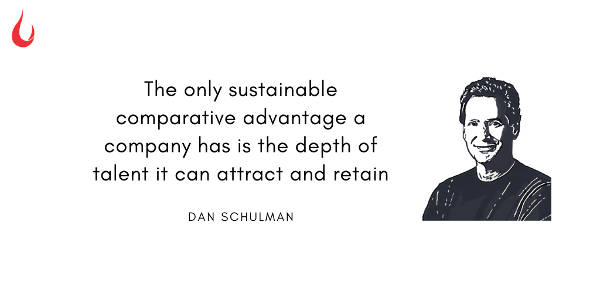
There’s a business case to do this. People tend to stick to you when you help them during tough times. He quotes PayPal’s Dan Schulman as saying, “The only sustainable comparative advantage a company has is the depth of talent it can attract and retain.”
However, there is a more contextual—social and political reason—too.
He writes, “What has changed is that coronavirus has intensified scrutiny of how little some companies pay. Brand-damaging protests, political pressure and investors’ growing attention to ‘social’ factors are all changing risk/reward calculations around low pay.”
Dig deeper
A crisis is an ideal time to raise pay
What today’s businesses can learn from print ads that went digital
In his interview with McKinsey, Canadian investor Kevin O’Leary (who is best known for his role in the American reality-TV series Shark Tank) shares some interesting insights about innovation and investing. To one of the questions, he cautions that changes can sometimes be extremely non-linear.
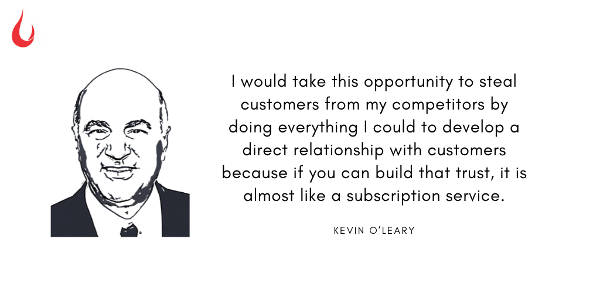
He says: “When the internet had just started, investors said, ‘If a dollar of print ads is worth a dollar on paper, it will be worth $1.20 online because you will reach more people easier and faster.’ That is not what happened. A dollar of print ads turned into one cent on the internet because the distribution was ubiquitous and there was a ton of competition. Is that the transition we will have? At Shark Tank, we are looking at the applications being sent in and see people are interested in their health in a way they had never been before. It’s not just about eating granola instead of hot dogs; it’s ‘How can I live my life so I never even catch a cold? What have you got that can help me do that?’ ”
Dig deeper
The committed innovator: A discussion with investor Kevin O’Leary
Why sequencing matters
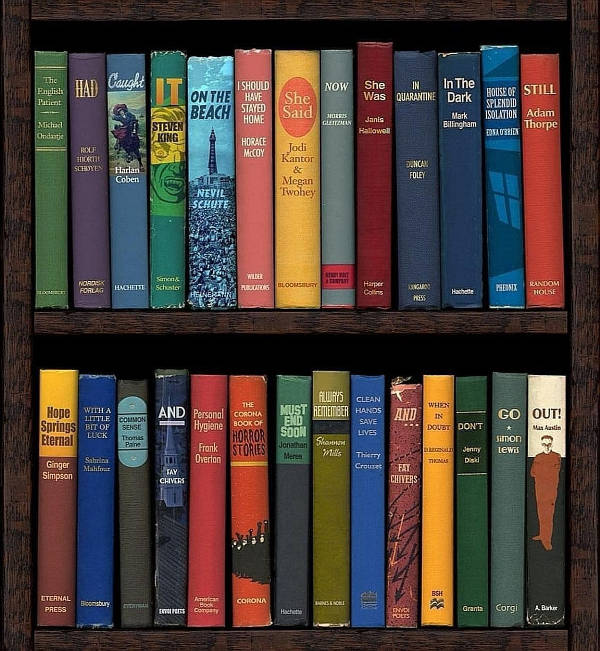
(Via WhatsApp)
What stories do book covers tell you? Share them with us, or share it on Twitter, tagging @foundingf. Or head to our Slack channel.
And if you missed previous editions of this newsletter, they’re all archived here.
Bookmark Founding Fuel’s special section on Thriving in Volatile Times. All our stories on how individuals and businesses are responding to the pandemic until now are posted there.
Warm regards,
Team Founding Fuel

Founding Fuel is sustained by readers who value depth, context, and independent thinking.
If this essay helped you think more clearly, you may choose to support our work.

Founding Fuel is sustained by readers who value depth, context, and independent thinking.
If this essay helped you think more clearly, you may choose to support our work.
Founding Fuel aims to create the new playbook of entrepreneurship. Think of us as a hub for entrepreneurs- the go-to place for ideas, insights, practices and wisdom essential to build the enterprise of tomorrow. It is co-founded by veteran journalists Indrajit Gupta and Charles Assisi, along with CS Swaminathan, the former president of Pearson's online learning venture.
Loading comments...


Readers also liked

·Work, Careers & Personal Mastery
WFH Daily #207: FF Recommends | How to make your online presence hack-proof
October 17, 2020: Once an email address you use to login and the password patterns are exposed, it leaves you vulnerable. Here’s how to minimise the risk
FF

Founding Fuel
WFH Daily #207: FF Recommends | How to make your online presence hack-proof
October 17, 2020: Once an email address you use to login and the password patterns are exposed, it leaves you vulnerable. Here’s how to minimise the risk

·Economy, Policy & Society
WFH Daily #206: Why liberal values matter
October 16, 2020: Francis Fukuyama on liberalism; China’s Digital Silk Route; Scott Anthony on DBS Bank; You get what you pay for
FF
Founding Fuel
WFH Daily #206: Why liberal values matter
October 16, 2020: Francis Fukuyama on liberalism; China’s Digital Silk Route; Scott Anthony on DBS Bank; You get what you pay for

·Work, Careers & Personal Mastery
WFH Daily #205: Why do people “go green”?
October 15, 2020: The Elephant in the Brain; The art of the start; How to prevent burnouts; An Indian twist
FF
Founding Fuel
WFH Daily #205: Why do people “go green”?
October 15, 2020: The Elephant in the Brain; The art of the start; How to prevent burnouts; An Indian twist
Explore more
Dive into other themes from our network.