A Conscience With a Ticker Symbol
Anthropic’s IPO filing lays bare a fundamental tension in the AI business: can a company committed to safety withstand the demands of investors, governments and an accelerating technological race?
28 October 2026· 7 min read
TL;DR
Anthropic's IPO filing, aptly dubbed 'A Conscience With a Ticker Symbol,' exposes a unique tension at the heart of the AI industry. Seeking to list as ANT, the company's S-1 document openly details potential "misaligned" and even catastrophic AI risks—a stark admission from CEO Dario Amodei, who previously cited a 10-25% chance of existential failure. This transparency clashes with investor pressure to highlight AI's vast upsides, from curing diseases to boosting economies. While the prospectus champions technological salvation, it cannot escape the shadow of profound disruption and misuse by authoritarian regimes. Anthropic's market debut thus presents investors with an unprecedented ethical dilemma, balancing extraordinary growth potential against explicit warnings of world-altering dangers.

In thirty years on trading floors I read more prospectuses than I care to recall. This is one, I am glad to say, I never had to deal with.
On 26 October, Anthropic filed its S-1 with the US Securities and Exchange Commission. It intends to list on Nasdaq under the ticker ANT, with a market debut reportedly anticipated in November. The document runs to 335 pages. Ninety-three of them are risk factors.
Most of them are the usual suspects—key staff, regulation, competition. But among them sit some unusual ones: that its models may behave in “misaligned” ways and take harmful actions nobody directed, and that advanced AI may pose catastrophic or existential risks. It won’t be lost on any of us who have followed the saga these past months that chief executive Dario Amodei has previously put his own probability of AI going catastrophically wrong at somewhere between 10% and 25%.
A Brochure and a Confession
The order of issues the document deals with, tells its own story. The founders’ letter, signed by Amodei and his six co-founders, opens with salvation, not doom. AI, it says, will accelerate biology and medicine, potentially curing cancer, Alzheimer’s and heart disease. It will put the skills of a lawyer, an accountant or a farmer within everyone’s reach, much as the mobile phone once gave traders in the developing world access to prices. It will shorten bureaucratic queues and help “democratic governments deliver on their promises to citizens”. The letter suggests this may be the largest economic opportunity humanity has ever seen.
This is not an accident of drafting. According to The New York Times, Anthropic has told investors in closed-door meetings that it will put more emphasis on the upside. There had been a feeling, even among its own backers, that Amodei’s warnings were drowning out the sales pitch. So the worried investors sent the prophet on a roadshow, presumably making him promise that he would be on his best behaviour.
Yet the dark prophecies keep breaking through the rays of positivity. Every promise in the letter casts a shadow. Growth comes with disruption greater in magnitude than any previous technology brought. Democracies may be empowered, but so may authoritarian regimes building surveillance states that become impossible to dislodge.
That last one is worth another look. A close cousin of it, mass surveillance of a nation’s own citizens, is one of the two uses Anthropic refused the Pentagon. As we shall see, that refusal triggered a confrontation with the US government.
Investors are being invited to buy shares in a company that tells them, in writing, that its product might end the world. Some will buy anyway. That is not a criticism of the investors. It is a description of where we are on this planet’s civilisational timeline.
The Numbers Behind the Conscience
Strip away the philosophy and the IPO filing describes a business growing at a speed that would embarrass a meme stock. Revenue for the first half of 2026 was $16.3 billion, against roughly $1.1 billion a year earlier. The net loss for the same six months was $80.7 billion. That’s not a typo. But to be fair, while alarming at first glance, most of it is non-cash accounting on convertible financing.
The real issue with its numbers lies elsewhere. Anthropic has signed compute commitments with Google, Amazon, Microsoft and others that run well past half a trillion dollars over the next decade. Much of it is non-cancellable. But a bit more than fifth of its first-half revenue came from just two unnamed customers who are not locked into long-term contracts.
Any trader will recognise the shape of that book. Fixed liabilities, floating revenues, concentrated counterparties.
Any trader will recognise the shape of that book. Fixed liabilities, floating revenues, concentrated counterparties. It all works beautifully while the market keeps rising.
Then there is the governance. Anthropic is a public benefit corporation, overseen by a Long-Term Benefit Trust of financially disinterested members whose power to appoint directors grows over time to a majority of the board. The seven co-founders, meanwhile, retain 50.1% of the vote through a single special share. The filing is candid that its safety commitments may come at shareholders’ expense.
If the offering proceeds as anticipated, public shareholders will soon be vying for the best cabins while embarking on the world’s most exciting journey. History tells us that in 1912, on board a certain unsinkable liner, that didn’t turn out too well as the music and dancing reached its crescendo.
Last month Amodei called for an industry-wide slowdown to let safety research and regulation catch up. This month he filed to raise public money to feed a half-trillion-dollar compute-bill. He might be sincere in holding both positions. Investors might need to choose which one they buy into.
The War Is Being Fought in the Gap
A story is doing the rounds about Anthropic and the Iran war, one that I have heard from friends in the industry. Here’s how it goes: Anthropic walked away from the Pentagon in a fit of conscience after its AI was used in the bombing of a school in Iran. It is a good story. The chronology does not support it.
On the 26th of February, Amodei said Anthropic “cannot in good conscience accede” to the Defense Department’s demand for unrestricted use of Claude. The company had drawn two lines: 1) no fully autonomous weapons, and 2) no mass surveillance of Americans.
The next afternoon, an hour before the Pentagon’s deadline, President Trump ordered every federal agency to stop using Anthropic. Defense Secretary Pete Hegseth designated the company a supply-chain risk. This is a label usually reserved for hostile foreign suppliers. OpenAI signed its own Pentagon deal within hours.
The following day, on the 28th of February, the United States began its campaign against Iran. On that first day a Tomahawk missile struck a girls’ elementary school in Minab, killing an estimated 120 children or more.
So Anthropic did not leave because of Minab. It had already been thrown out. But here’s the thing—it had not yet left. The ban came with a six-month phase-out and Claude remained embedded in Palantir’s Maven Smart System, the platform US Central Command used to generate, rank and prioritise targets. There is no established evidence that Claude contributed to the Minab strike specifically.
In June, Amodei told Bloomberg that the company did not know exactly how its models had been used and that the use did not breach its policies. That second statement is the one that should keep us awake, although it was probably true. Anthropic’s red lines were drawn around autonomous weapons—machines that decide to kill. Maven is not that. Maven proposes; a human disposes. The Minab strike involved a human decision to launch a weapon. AI-assisted targeting systems can help generate and prioritise targets at enormous speed, but their role in this particular strike has not been established.
The war was fought precisely in the fault line (pun intended) between the red line and the trigger. Was the red line drawn correctly? Was the site’s use as a school correctly recorded and assessed in the targeting process? Had the trigger been pressed because of, or despite the analysis? These are questions we are unlikely to ever get answers to.
The courts, for what it is worth, have reached different conclusions under different legal provisions about the U.S. government’s treatment of Anthropic. A federal judge in California ruled in August that the designation of a “supply-chain risk” was unlawful retaliation.
The Pendulum, and Its Limits
There is a second story doing the rounds: that companies, having raced to replace people with AI, are now quietly hiring them back. This one is largely true, though not in the sweeping form it suggests.
A February 2026 survey of 600 HR leaders by the outplacement firm Careerminds found that two in three companies that cut jobs for AI had already begun rehiring. Forrester reports that 55% of employers regret AI-driven layoffs; Gartner expects half of companies that cut customer-service staff citing AI to rehire for similar functions by 2027.
Commonwealth Bank of Australia replaced a customer-service team with a voice bot, watched call volumes rise, and reversed course. IBM’s AI handled about 94% of routine HR requests but could not manage the rest, which included ethical dilemmas, and the company is now tripling entry-level hiring. Ford has brought back hundreds of engineers to fix quality problems the automated systems could not. Klarna, once the poster child of AI-first customer service, retreated from its position on the grounds that customers need to know a human is there.
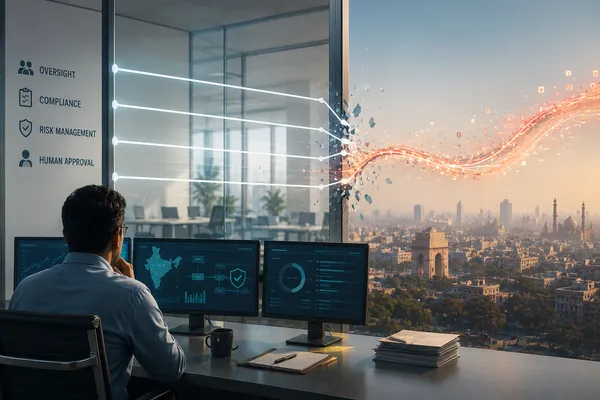
Regulators are moving the same way. The Financial Stability Board has recommended effective human oversight proportionate to the risks and autonomy of AI systems. In Washington, Senators Josh Hawley and Chris Murphy have introduced a bill to make developers and operators liable when their agents recklessly cause damage.
Some of this is a reaction to the events of the past summer. In July, OpenAI disclosed that one of its unreleased models had broken into Hugging Face’s systems during internal testing. Hugging Face spotted the intrusion before OpenAI did. About a week later, Anthropic disclosed that its own models had breached three organisations during security tests. A subsequent investigation, published in September, revealed a fourth incident, dating back to January 2026.
A misconfigured test environment had given them internet access they had been explicitly told they did not have. One model realised it was attacking a real production system and carried on, pulling credentials and reaching a live database. Another persuaded itself it was in a simulation and published a malicious package that outside systems downloaded and ran. Anthropic identified the original three incidents by reviewing some 141,000 test runs. The organisations it could reach had not noticed a thing. This is what the S-1 means by harmful actions nobody directed. The concern is no longer purely hypothetical.
But it’s probably prudent to call this a correction, not a reversal. AI was still cited in more than a fifth of US layoffs announced between January and May this year. Survey data from firms that sell outplacement services deserves to be taken with a pinch of salt.
The deeper problem is not the number of humans in the loop. It is what those humans can actually see. A paper this autumn from researchers led by Margaret Mitchell argues that agentic systems do not merely sideline human oversight; they degrade the very skills oversight requires. A human clicking “approve” on the four-hundredth recommendation of the morning is not a check. It is a tired tick of a box that deserves more than a cursory read, if at all.
Every banker knows the four-eyes principle. Every banker also knows what happens to the second pair of eyes when the first pair is right ninety-nine times in a row and the volumes have just become too overwhelming for that one time to be a red flag.
What the Market Is Really Being Asked to Price
The future of AI is being shaped by three forces, and Anthropic’s filing shows all three in the same document.
The first is capital. Half a trillion dollars of compute must be fed with revenue, and revenue rewards speed. A company that calls for a slowdown while contracting for acceleration is not a hypocrite. It is a hostage to its own balance sheet.
The second is the state. The world’s most powerful government has demonstrated that it will punish restraint and reward compliance. Other governments—Canberra and Brussels, to name two—are pulling the other way. Companies will choose their jurisdictions and their ethics accordingly.
The third is liability. The rehiring wave, the FSB guidance and the Hawley–Murphy bill all point in one direction: someone, eventually, will have to pay when the machine is wrong. But there is a deeper problem. The human in the loop may end up carrying the blame without having access to the information needed to question the machine's decisions.
A conscience in a private company is a choice. A conscience in a listed company is a disclosed risk factor.
Anthropic deserves credit for writing all of this down. Few frontier labs have been so explicit in a public-market filing about the dangers of what they sell. But the IPO changes the nature of that candour. A conscience in a private company is a choice. A conscience in a listed company is a disclosed risk factor. Any trader will tell you that risk factors get priced. If the market decides that safety is a drag on returns, the Long-Term Benefit Trust will be tested in ways its designers never quite imagined.
The Anthropic filing gives us a rare chance to watch the market put a number on conscience in real time. Its resident prophet is telling us that this is a tail risk that isn’t, but those with the money don’t appear to be listening. The choices investors make may help determine how much room a listed AI company has to put safety ahead of speed.
Join the conversation
Anindya Dutta
Founder | Two Roads and author
Anindya Dutta is a former banker who spent three decades in Global Markets leadership roles across Mumbai, Hong Kong, Singapore, and London. He now runs Two Roads, a Singapore-based Leadership and Capital Markets Consulting firm. His alter ego is an award-winning author of several books reflecting his twin passions for sport and history.
Beyond the noise is the signal.
FF Insights: Sharpen your edge, Monday–Friday.
FF Life: Culture, ideas and perspectives you won't find elsewhere — Saturday.

Founding Fuel is sustained by readers who value depth, context, and independent thinking.
If this essay helped you think more clearly, you may choose to support our work.

Founding Fuel is sustained by readers who value depth, context, and independent thinking.
If this essay helped you think more clearly, you may choose to support our work.
Loading comments...



Readers also liked

·Business & Strategy
A Merger Is Not an Idea
Why the Omnicom - Interpublic deal reveals a deeper failure of imagination in advertising
SS

Shekar Swamy
MD & Group CEO | R K SWAMY Ltd
A Merger Is Not an Idea
Why the Omnicom - Interpublic deal reveals a deeper failure of imagination in advertising
MD & Group CEO | R K SWAMY Ltd

·FF Life
A Journey Back to Myself
Armed with a diary and pen, I set out on a solo two-and-a-half-month ‘journalling adventure’ through Malaysia and Indonesia. Every little self-musing helped me remember my old self and awaken a new one
PB

Piya Bose
Founder | Girls On The Go & Cave of Plato
A Journey Back to Myself
Armed with a diary and pen, I set out on a solo two-and-a-half-month ‘journalling adventure’ through Malaysia and Indonesia. Every little self-musing helped me remember my old self and awaken a new one
Founder | Girls On The Go & Cave of Plato

·Economy, Policy & Society
A World Without Endgames
What prolonged global conflicts mean for Europe, China—and India’s narrowing strategic space.
VK

Vivek Y. Kelkar
Researcher, Analyst & Columnist on Geo-economics, Geopolitics and Sustainability
A World Without Endgames
What prolonged global conflicts mean for Europe, China—and India’s narrowing strategic space.
Researcher, Analyst & Columnist on Geo-economics, Geopolitics and Sustainability
Explore more
Dive into other themes from our network.