·FF Life
The Happiness We Keep Postponing
A reflection on joy, and why the ordinary day may be enough
HC

Haresh Chawla
Investor | Entrepreneur
A Bengaluru family with no mountaineering background spent eight months preparing for the Annapurna Circuit—and discovered that ordinary people may be capable of far more than they imagine.

On July 16, 2025, just past midnight—a time when sensible people are sleeping—I got a WhatsApp message from a friend.
"Why aren't you in the Annapurna group?"
I didn't even know there was an Annapurna group.
My responses over the next few minutes were predictable.
“What group?”
“Wasn’t aware. Doubt I can do it though.”
“Seems like crazy fitness required.”
Let me set the scene. My default uniform is a t-shirt that says “Chill Maadi Swami”—roughly translated from Kannada: "Relax, dude." My 29-year-old son Ashwin's favourite shirt says "This is my Lazy shirt." We are not outdoorsy people. We exercise and are active, but our idea of altitude is the third floor of a mall.
And yet, within six minutes of that midnight message, I was already doing the mental math. "2026 is good in that we'll be a year younger; 2027 is good in that we get 18 months to get ready."
That's the thing about improbable decisions. They don't announce themselves with trumpets. They show up as a midnight WhatsApp message you almost ignore.
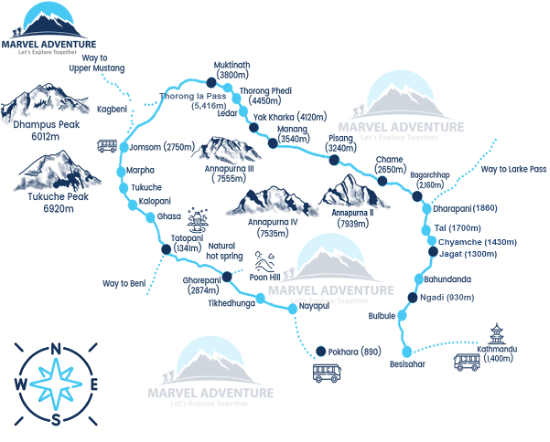
The formal facts of what we were considering: the Annapurna Circuit Trek in Nepal. 70 km over 6 days. Culminating in Thorong La Pass at 5,416 metres (17,769 feet), the world's highest hikeable pass. Minus 15 degrees Celsius. A brutal descent.
The informal facts were more relevant. None of us had any altitude experience. Or cold weather trekking experience. Our longest hike until then had been a casual single-day climb. I was going to be 61. My wife Tulsi was 59. Ashwin was 28 and while much more athletic, he also wasn’t necessarily focusing on a 22 BMI (as yet!).
But once the dates got frozen, one thing was clear: if we didn’t attempt this in March- April 2026, we would probably never get the chance again.
What actually mattered wasn't the decision to go, but who to go with.
When you attempt something you’re wildly unqualified for, the people around you matter more than the plan.
Two of my closest friends from my St Joseph’s and UVCE days—DoubleA and Dee—were organising the trip. They were in excellent shape, had trekking experience, and understood what the Himalayas demand.
When they heard that the "Chill Maadi" household was joining, their reaction wasn't polite encouragement: "Don't die. Put in the effort. We’ll help you every step of the way. But be ready to pull out, even at the last minute”.
And then they actually did help us every step of the way.
That high-trust, safety-first environment changed everything. They became mentors, coaches, tormentors and emotional stabilisers rolled into one.
They invited a couple of close friends and family members who were experienced hikers. We felt we were in a group that knew the difference between ambition and recklessness. They said it didn’t matter that we may struggle keeping up.
They gave us four things we could not have generated ourselves: confidence, judgment, brakes and emotional stability.
The ability to say “this level of fatigue is normal, keep going.” The judgement to know when to stop—"we're not ready for that yet" or "let's not attempt this in these conditions". When doubt is overwhelming, having people in the group who've been through this before and can absorb that doubt without amplifying it, changes everything.
Spouses were included. This wasn’t a boys’ trip where someone goes off to prove something and comes back with a story. Families trained together. Accountability became impossible to escape when your spouse was lacing up beside you.
Without this close-knit group, we would never have attempted Annapurna.
Once word spread that the “Chill Maadi” family was heading to the Himalayas, reactions fell into three categories.
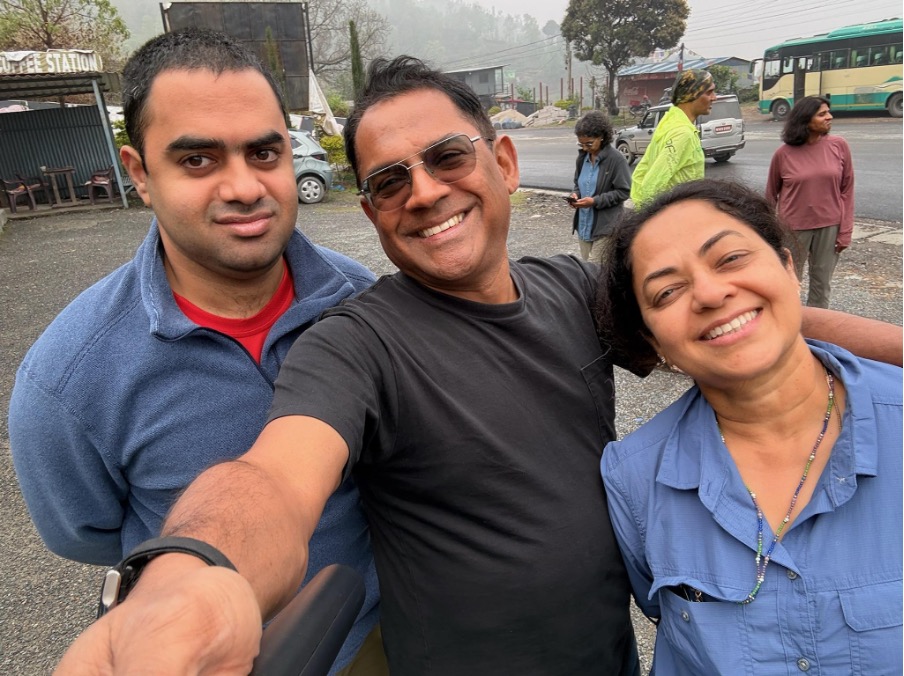
The first came from seasoned hikers: “DON’T DIE. Train properly.” Blunt. Loving. Useful.
The second came from concerned pragmatists: “What exactly are you trying to prove?” Fair question. We didn’t really have a great answer.
The third came from my 90-year-old mother: “You can do it. Be positive!” Her confidence mattered during moments of doubt.
Humbled at Makalidurga
September 14, 2025. Makalidurga. About 60 km from Bengaluru.
Our first real test.
And we were terrible.
Apple Watch data doesn’t lie. Workout time: 3h 17m. Distance: 5.21 km. Elevation gain: 296 metres. Average heart rate: 127 BPM. Peak heart rate: 162 BPM — meaning even moderate inclines were pushing me toward my limits.
Six hours total including rest.
In Annapurna terms, 5.21 km is roughly half a day's easy walking. And we were done. Cooked.
Even our shoes were wrong—slip-on sneakers.
As we staggered down, someone pointed at Hotel Annalakshmi near the base of Makalidurga and observed that maybe that was the summit we were actually qualified for. Everyone laughed. Nobody disagreed.
That day changed everything. Makalidurga was where we stopped telling ourselves comforting stories about how "it'll probably be fine" and started treating the trek seriously.
The mountain was seven months away. We were nowhere close to ready.
One thing became obvious very quickly: Walking for a few hours is nothing like high-altitude multi-day trekking. This is a sport where completion is all that matters; competition is irrelevant.
We had to learn the most basic physical discipline—at our age, and it was humbling.
Recovery matters as much as endurance. Anyone with enough motivation can push through one hard day. But can your body reset overnight and do it again? And again? For six days in a row?
Descents are harder than ascents. Going up is demanding on the cardiovascular system, but going down is structurally punishing. The knees absorb impact with every step.
Altitude changes all the rules. Altitude doesn't care about your VO2 max, the gold standard for evaluating aerobic fitness. At 5,416 metres, you're operating on roughly half the oxygen you're used to. Your heart rate is elevated just lying down. Sleep is disrupted. Appetite disappears. Mental clarity fades. You can be the fittest person in the room and still get flattened by altitude. What matters is how your specific body responds to hypoxia, and you can't know that until you're there.
Gear is a system, not a shopping list. Layering — base layer for wicking, insulation for warmth, shell for wind and rain — sounds simple until you realise that the wrong sock fabric or the wrong inner layer means blisters or hypothermia.
Diet and sleep must change. What we ate, when we slept, how we recovered needed rethinking.
So we did what any sensible unqualified people would do.
We shut up and prepared.
The three pillars of our six months of structured training:
Endurance. The ability to walk for six to eight hours at moderate intensity.
Rapid Recovery. To be able to go three to four days in a row with no major aches and pains. Because on the mountain, there is no rest day option.
Lower Body Strength. To manage the steep descents — 1,600 metres of steep drop on the pass day alone — without destroying your knees.
And our training mantra: “We need to COMPLETE — not COMPETE.” This wasn't about speed. It was about getting three ordinary bodies safely across a 5,416-metre pass and down the other side.
Preparation in Bengaluru for a Himalayan trek looks boring.
Treadmill at 13.5% incline. 3.5 km/h. One hour. Backpack loaded with 5 kg. Three to four times a week.
The key metric: Stay in Zone 2—heart rate at about 60% capacity, roughly 125-135 BPM, with no drift. You're walking slowly on a treadmill for an hour, watching the clock, going nowhere.
Goal: Build the aerobic engine without overtraining.
Staircase repeats. 70 to 80 floors with the backpack. The 17 steps of our two-storey home became our mountain simulator. Up and down, up and down, staying in Zone 2, once or twice a week.
Lower body workouts. Lunges. Squats. Stretches. Not bodybuilder training, but functional strength for descending on rocky, uneven terrain.
The driving force behind this entire journey was Tulsi, not me. The moment she committed, the project became inevitable.
In December, she completed her first 10K run at the Bengaluru Midnight Marathon.
At 59.
If she was going to out-train me, I could no longer pretend this was theoretical.
Tulsi also handled the gear and logistics—shoes, socks, inners, wicking layers, backpacks that fit our individual bodies, snacks, salts, nutrition, packing, weight constraints. I’m confident she can start a side business of consulting for anyone interested—she knows every aisle of Decathlon and REI.
In January, two months before the Big Trip, Dee took us on a difficult hike near Cupertino.
Every step became a training lesson: how to tie shoes properly, how to adjust backpacks, how to hydrate, and the discipline to turn around at 1:30pm as agreed even when the summit was barely 20 minutes ahead.
Back in India came Chikmagalur training hikes and repeated Nandi Hills sessions.
I tracked everything. Apple Watch for workout data. Whoop band for recovery metrics and sleep quality. And ChatGPT to make sense of the data.
But there's another kind of preparation that nobody talks about.
"Ganda Hai to Zinda Hai." If it's dirty, you're alive. Living eight days with three pairs of clothes. Not shaving. Basic tea house facilities. Squat toilets. Cold water. No privacy. Shared rooms.
For a family accustomed to Bengaluru comforts — our own beds, our own bathrooms, good coffee in the morning — we had to genuinely accept that we will be uncomfortable, that uncomfortable is the baseline—not a problem to be solved but a condition to be experienced and enjoyed.
March 29, 2026. The trek finally begins.
Eight months earlier, I was a man in a "Chill Maadi" t-shirt wondering if attempting Annapurna was ridiculous. Now I was standing in a Kathmandu-bound departure queue with trekking poles.
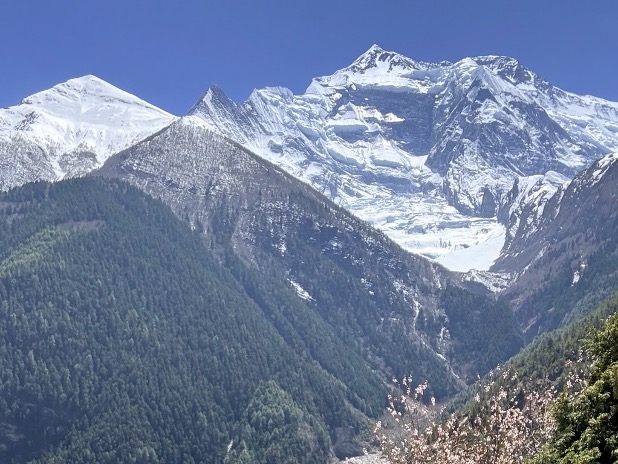
The Annapurna Circuit begins with two days of sitting. Long bus rides. Longer jeep rides. On roads that redefine your understanding of "road".
And dal bhaat. As they say in Nepal, Dal Bhaat Power, 24 Hour!
Dal bhaat would become our daily constant — breakfast, lunch, dinner, all variations on the theme of rice and lentils. By day three you stop thinking about it. By day eight you can't remember eating anything else.
March 31. Pisang to Manang. 16 km. 8 hours.
Beautiful landscapes. Snow-capped peaks appear through the valley like a slideshow designed to make you forget what you've signed up for. Growing confidence. Smiling selfies. The training held. Our pace felt good.
That evening, a full moon lit up the Annapurna massif above Manang.
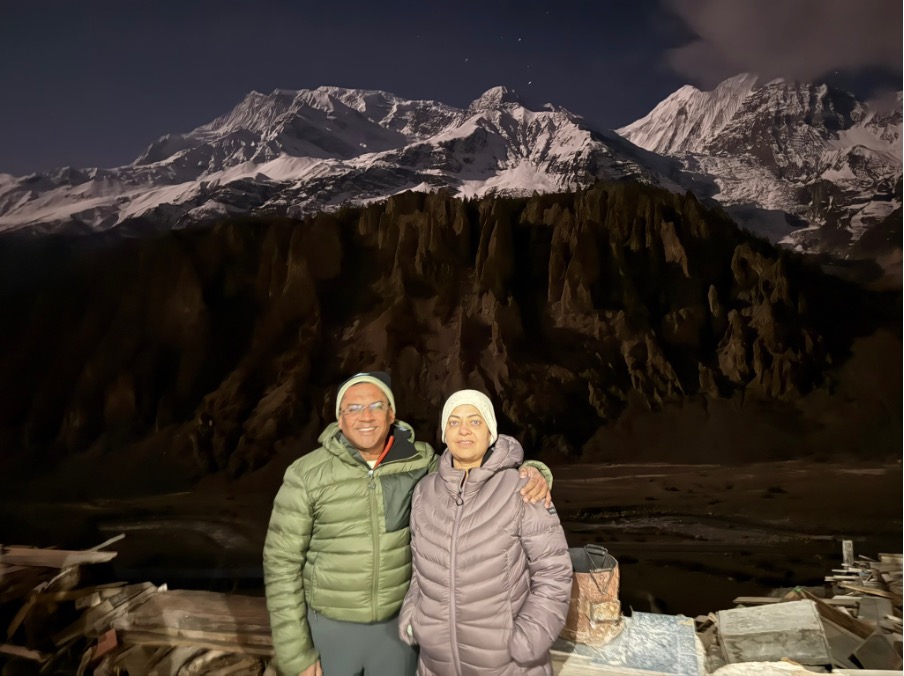
If the trek had ended here, it would have been worth it.
Which is exactly the kind of thing you think before the altitude starts talking.
Nobody fully explains altitude.
You can read about the symptoms of altitude sickness and memorise the SpO₂ thresholds. None of it prepares you for oxygen saturation dropping to the mid-80s (at sea level that would put a doctor into mild panic) and a resting heart rate above 100 BPM while lying still.
Simple tasks — tying your shoes, climbing a short flight of tea house stairs — feel disproportionately hard. Sleep doesn't restore you.
More importantly, altitude attacks confidence before it attacks the body.
You start wondering. Is this headache the beginning of Acute Mountain Sickness (AMS)? Am I the weakest person in the group? Should I say something?
The tension that defines high-altitude trekking is this: you have to be mentally strong enough to not let doubt take over, and yet honest enough to report symptoms to your guides immediately. Navigating that tension, hour by hour, day by day, is what altitude really demands of you.
Our experienced friends became critical here. They normalised symptoms without dismissing them and helped distinguish discomfort from danger.
That emotional steadiness mattered as much as physical fitness.
The acclimatisation strategy was simple: climb high sleep low (CHSL) — during the day climb high, descend to sleep lower where oxygen is slightly more abundant.
From Manang (3,540m) up to Ice Lake (4,000m+), then back down to sleep at Manang. We repeated this protocol when we climbed close to the Gangapurna Glacier. The next two days featured medium hikes to Yak Kharka and Thorong Phedi — in both cases we gained about 400m. Our guides ensured that we always climbed just a bit extra, spent 30 minutes and then came back down before sleeping. Each day took us slightly higher, teaching the body to operate with less oxygen.
A preventive dose of Diamox. Hydration—beyond what feels natural. Forced eating even when appetite has disappeared. All guided by people who understood altitude far better than we did.
The porters carried impossible loads without complaint—up terrain that's destroying us with just our day packs.
Each of us was allowed 12kg; each porter carried three such duffel bags.
I later learned that to become a guide in Nepal, one has to work as a porter for 2 years, but not everyone graduates to becoming a guide.
The Sherpas and guides are extraordinary. They have to be both empathetic and strict. Many are in their mid-twenties—and most people in our group were their parent’s age.
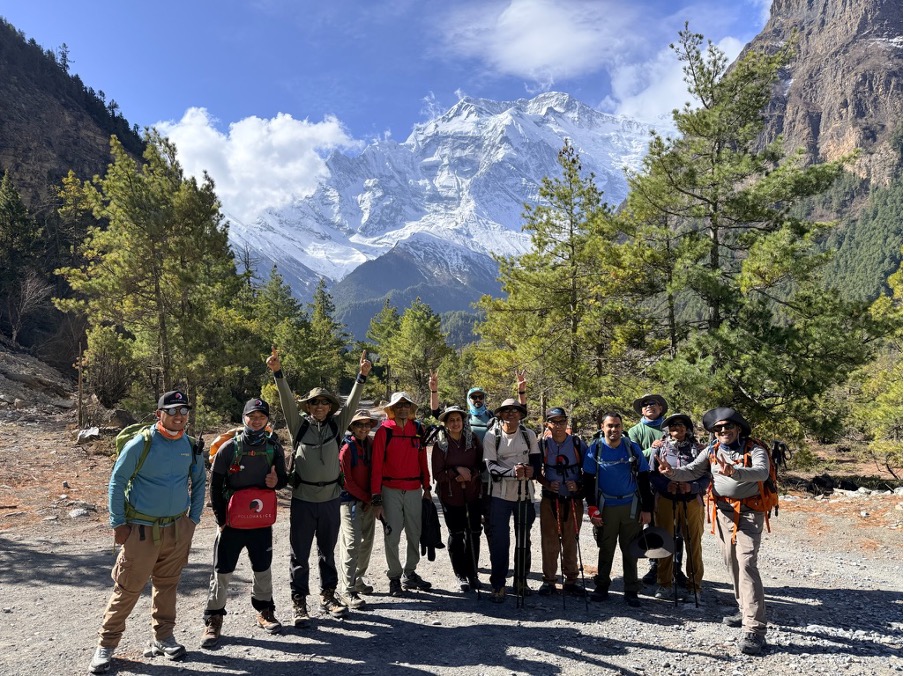
At Gangapurna Glacier, the scenery is staggering — glaciers, ice-blue lakes, the full weight of the Annapurna range filling the horizon.
At Yak Kharka (4,000 metres, 5 hours), the landscape changes. Vegetation thins. The air feels different — not thinner exactly, but less generous.
Then to Thorong Phedi (4,500 metres, 5 hours). This is the staging point—the last stop before the pass. The mood is focused, slightly nervous, mostly quiet yet excited. People turn inward. The group dynamic shifts from banter to mutual watchfulness. Are you eating enough? How did you sleep? Any headache?
The plan for the pass attempt: wake before dawn and start the 16-hour push over Thorong La and down the other side to Muktinath. Everything was on schedule. The weather till then had been amazing and we needed it to hold for one more day!
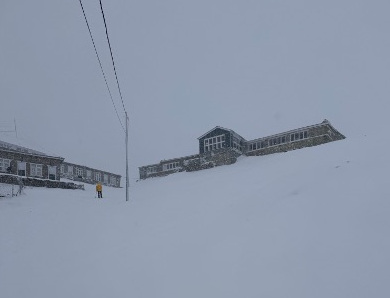
And then at 2:30 AM, along with our wake up call, came the news we feared — a snowstorm that turned Thorong Phedi and the entire rest of the journey into a white wall.
The guides cancelled the crossing immediately. No debate. No heroics. Just: “Too dangerous.”
I want to be honest about how crushing that felt.
Eight months of preparation. One day away from the goal. And the mountain simply says no.
But this is where experience matters. The experienced trekkers understood instinctively what beginners struggle to accept: Ego is dangerous. It's what makes people push into storms. It's what gets people killed.
The mountain does not negotiate with your ambition.
The new plan was to move to High Camp and wait for a weather window.
High Camp at 4,800+ metres in a snowstorm is not comfortable. Horses stand in the snow looking mildly philosophical. The wooden lodge has a window view of exactly nothing — just white. All you can hear is the sound of wind, and people pretending they're not worried. A large group of trekkers tried to keep themselves warm by huddling close to one another.
We were fortunate to have rooms and went to sleep early. We set our alarms even earlier. And waited for 2:30 AM to tell us whether we had a chance. Our guides had advised us to consider taking ponies and we eventually relented. I was most unhappy and didn’t sleep well. But when we woke up, we were told, “Sorry, no ponies available.” The decision was taken out of our hands!
April 6, 2026. 4:15 AM.
Darkness. Snow. Headlamps.
The trail ahead is a line of bobbing lights climbing into nothing.
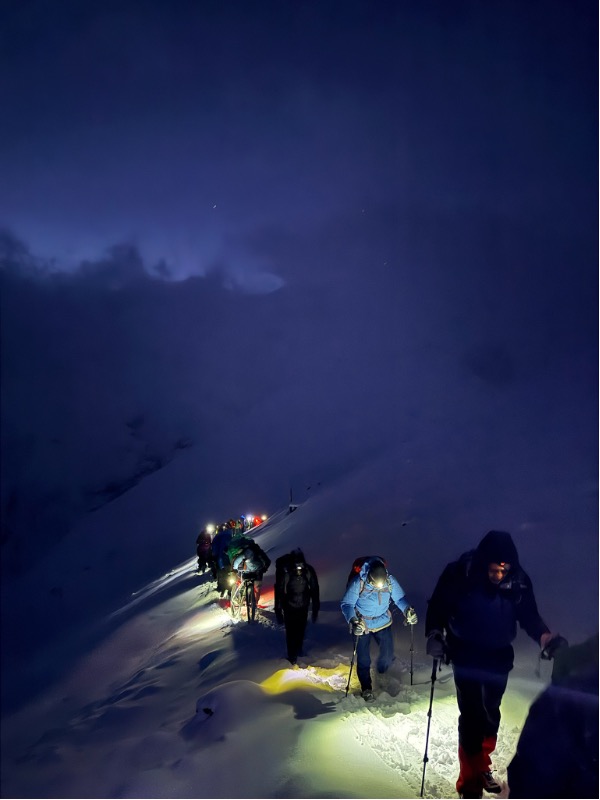
There’s nothing to see except the boots of the person in front of you and the patch of snow your headlamp illuminates.
You fall into an almost meditative rhythm. Step. Breathe. Step. Breathe. Pole plant. Step.
The treadmill sessions, staircase repeats and all the boring preparation suddenly mattered.
Your legs know what sustained Zone 2 feels like.
And then you suddenly realise you’re on an 8-inch-wide track. One wrong step and you can go sliding down to eternity. It’s hard to not freeze, so to speak. As the body warms up, however, the big picture takes center stage: we are a few hours away from the summit.
At sunrise, the snow turned pink. It's beautiful and terrifying at once. You can finally see how stunning the trail is.
8:30 AM. The final push. We could see a long line of trekkers on the ridge, inching forward.
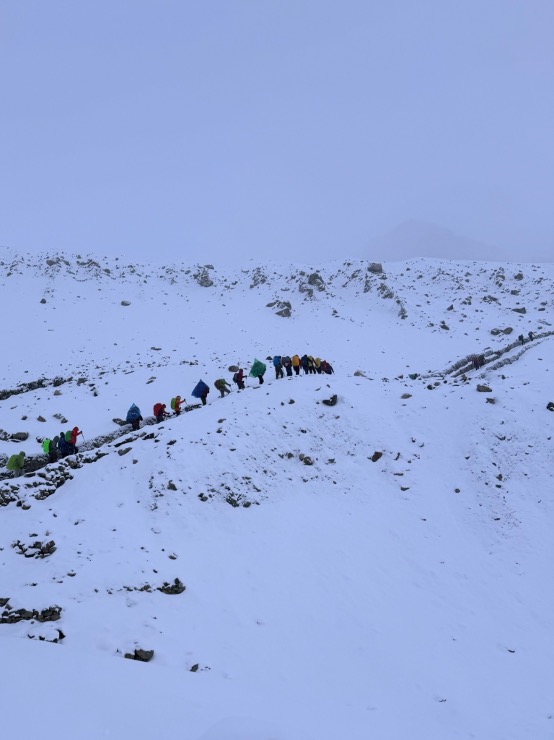
The Sherpas set the pace—slow, but exactly right at that altitude. Every rest stop, every sip of water, every quiet word of encouragement is professional and deeply human at the same time.
Nobody was left alone. The experienced hikers position themselves at the lead, in the middle and at the end—setting pace, and watching for anyone falling behind. Nobody is allowed to veer off the trail or push ahead recklessly.
At around 8:45am, my body felt a bit queasy. The Sherpas realised I was likely running on low sugar and possibly dehydrated. They sprung into action and ensured I ate a bar of peanut chikki and drank water with Electral immediately. I was also struggling with numb fingers and realised the liner gloves were constricting blood circulation and had to be got rid of. Thankfully, these were the only two scares other than fatigue.
10:30 AM. 5,416 metres
Prayer flags. The wooden sign. Snow everywhere.
What does it feel like? Relief. Disbelief. It’s finally here. We actually made it. Along with all our friends.
Three people in matching red jackets — a 61-year-old whose default mode is "Chill Maadi", a 59-year-old who at 4’9” needs to take five steps for every four others take, and a 28-year-old who owns a “lazy shirt” — standing at the highest hikeable pass in the world.
Tulsi stopped when we were 20 meters short and we shouted together: “We are so lucky!”
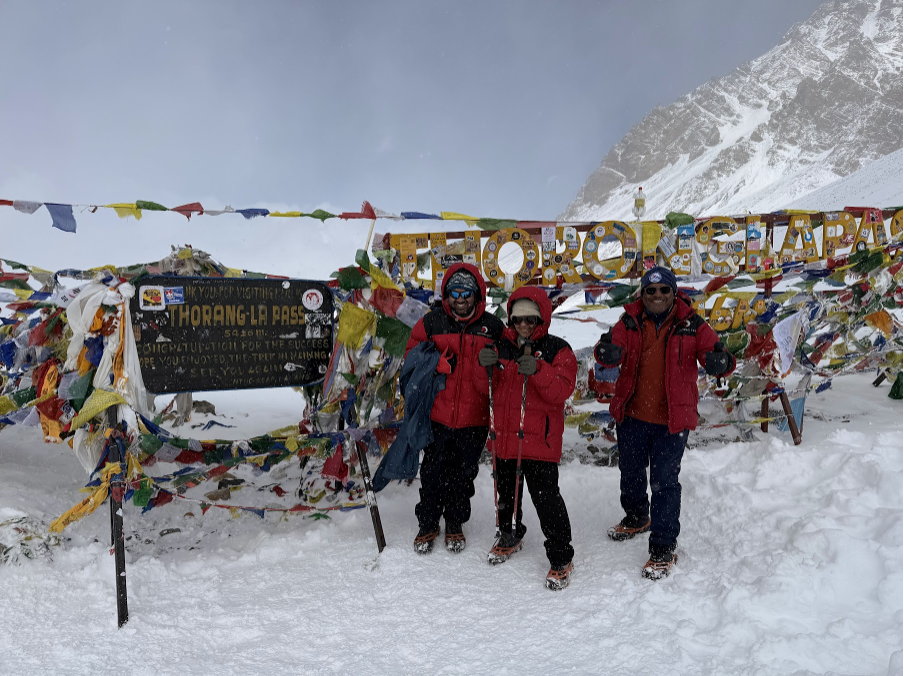
The full group gathers. Photos. Hugs. A few tears that the cold turns into ice.
We stopped at the tea house at the top for a nice hot lemon ginger tea, then stayed for maybe 15 minutes, because you don't linger at 5,416 metres in a snowstorm. Your body is running on fumes.
If Steve Jobs were here, he’d have said, “this may be enough — but it's not all”.
The hardest part — the descent — was ahead of us. I had been told that within 200 meters of descent, the body feels better as oxygen supply increases.
However 1,600 metres of near vertical drop (30% gradient). In a snowstorm. On legs that have been climbing since 4:15 AM. Over rocky, slippery, unforgiving terrain that alternates between snow, ice, mud, and loose rock — sometimes all four in the same ten-metre stretch.
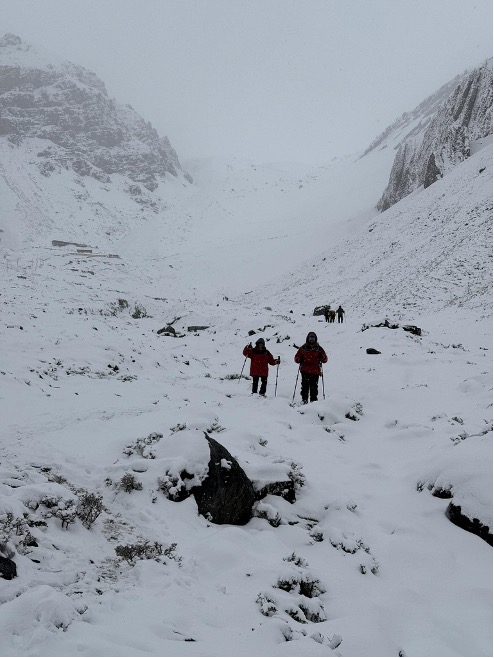
Every step becomes a negotiation between gravity, fatigue, and knee cartilage.
This was why we had trained descents so obsessively. Not for the climb up. For the way down.
The trekking poles aren't optional. The snow-mud mixture has a personal vendetta against your visibility and balance. And nature threw in some hail for good measure.
Food had been limited. We were out at 4 AM and were allowed only a few protein bars and our favourite peanut chikki. Hunger and the risk of dehydration started getting real. But no teahouses in sight.
Four hours later, cold, exhausted, famished and dehydrated, we reached Muktinath Phedi and were greeted with a hot bowl of noodle soup, Thupka.
This was the first moment when we felt a sense of triumph—and some high-fives.
Another two-hour descent into Muktinath in snow and fading light awaited us.
At Muktinath, we could finally remove those crampons on our shoes and visit the Buddhist and the Hindu temples to offer a humble thank you.
And then something unexpected happened.
A group of young trekkers who’d just completed the Annapurna Base Camp overheard us speaking Kannada.
“You’re from Bangalore?” they asked.
Then, after hearing we had completed the Annapurna Circuit:
“You parents did this?”
That was the moment it stopped feeling like a trek.
A lifelong accomplishment.
Not because we summited a mountain. But because we had transformed ourselves enough to attempt it.
I keep coming back to this because it's the thing I want people to remember.
We did not do this alone. We could not have done this alone.
Friends coached us when our cardio was embarrassing. Experienced hikers designed our preparation. Sherpas read the weather and cancelled the dangerous crossing. Porters carried impossible loads.
The group looked after each other every day.
We went as friends.
We came back as something closer to family.
Right, so here comes the wisdom section.
Take it with appropriate scepticism. I crossed one mountain pass, not seven. (Jagat, meaning world, by the way, is also a town along the route.)
If you ever attempt something improbable:
Choose your people first.
Respect the risks.
Speak to your doctor. Your actual doctor, not your WhatsApp group.
Train seriously.
Be ready to turn back. If the guides say no, it is no.
And don’t automatically assume “people like us can’t do this.” You might be wrong. We were.
Co-Founder and Managing Partner | Prime
FF Insights: Sharpen your edge, Monday–Friday.
FF Life: Culture, ideas and perspectives you won't find elsewhere — Saturday.

Founding Fuel is sustained by readers who value depth, context, and independent thinking.
If this essay helped you think more clearly, you may choose to support our work.

Founding Fuel is sustained by readers who value depth, context, and independent thinking.
If this essay helped you think more clearly, you may choose to support our work.
A reflection on joy, and why the ordinary day may be enough
Haresh Chawla
Investor | Entrepreneur
A reflection on joy, and why the ordinary day may be enough
Investor | Entrepreneur

Disability inclusion, leadership imagination, and the limits of intent

Subhashis Sinha & Nikunj Kumar Jain
Disability inclusion, leadership imagination, and the limits of intent
Subhashis Sinha & Nikunj Kumar Jain

Speed is not strategy. The real battle is over sovereignty, science and state capacity

Founding Fuel
Speed is not strategy. The real battle is over sovereignty, science and state capacity
Dive into other themes from our network.