Be Unreasonable
How photographer Amit Verma turned a series of unconventional and “unreasonable” bets into a distinctive body of work—and a reputation to match.
18 September 2026· 7 min read
TL;DR
Photographer Amit Verma forged a distinctive career and reputation through a series of "unreasonable" choices, inspired by Nobel laureate Amartya Sen’s unconventional advice. Eschewing traditional career security, Verma strategically prioritized a retainership with a key client and boldly invested in a high-end Leica camera for personal artistic exploration, not immediate professional work. Sen’s profound counsel to "become an unreasonable person" empowered Verma to embrace financial risks and the potential for failure as crucial steps toward artistic growth. This counter-intuitive strategy, initially appearing illogical, ultimately transformed perceived stubbornness into clear vision, defining Verma's unique contribution to the creative landscape.
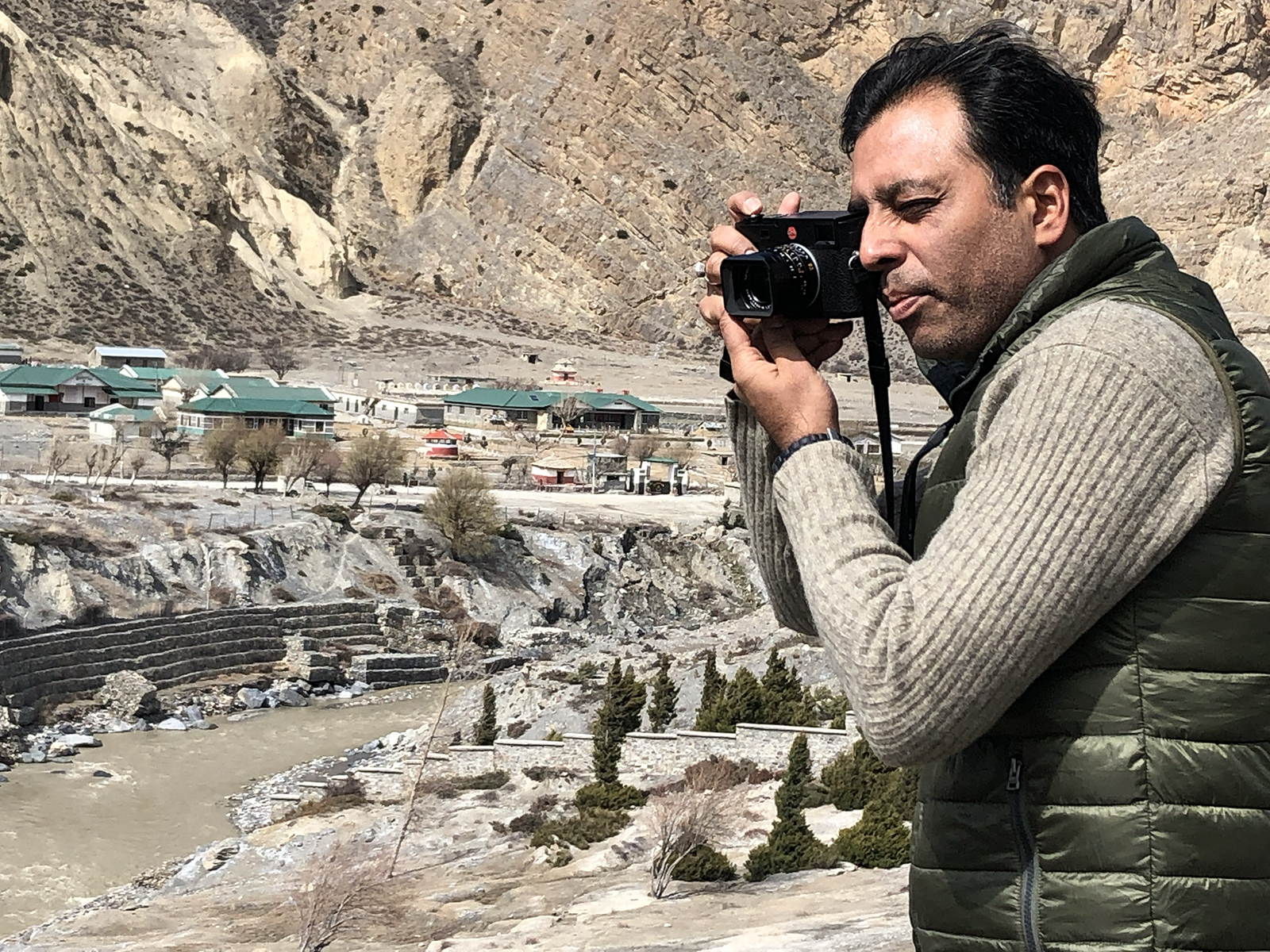
Editor’s Note: Amit Verma is a Delhi-based photographer whom several of us at Founding Fuel have known and worked with. That relationship is incidental to why we are telling his story.
This is not intended as a profile. It is the story of how a working artist built a distinctive body of work—and a standing in his field—by acting on advice most people would consider unreasonable. Amit chose an anchor client over the security of a job, put his own money behind his craft and made bets that were difficult to defend before they paid off.
He is not a celebrity, and that is precisely the point. The choices he made are available to many working professionals, even if the conviction to make them is not. The advice came from Nobel laureate Amartya Sen. What makes the story worth telling is that Amit followed it long after a more reasonable person might have moved on. What looks like stubbornness in the moment can look like vision in hindsight.
Amit Verma is fuzzy on the year. 2013, maybe 2014. He remembers everything else.
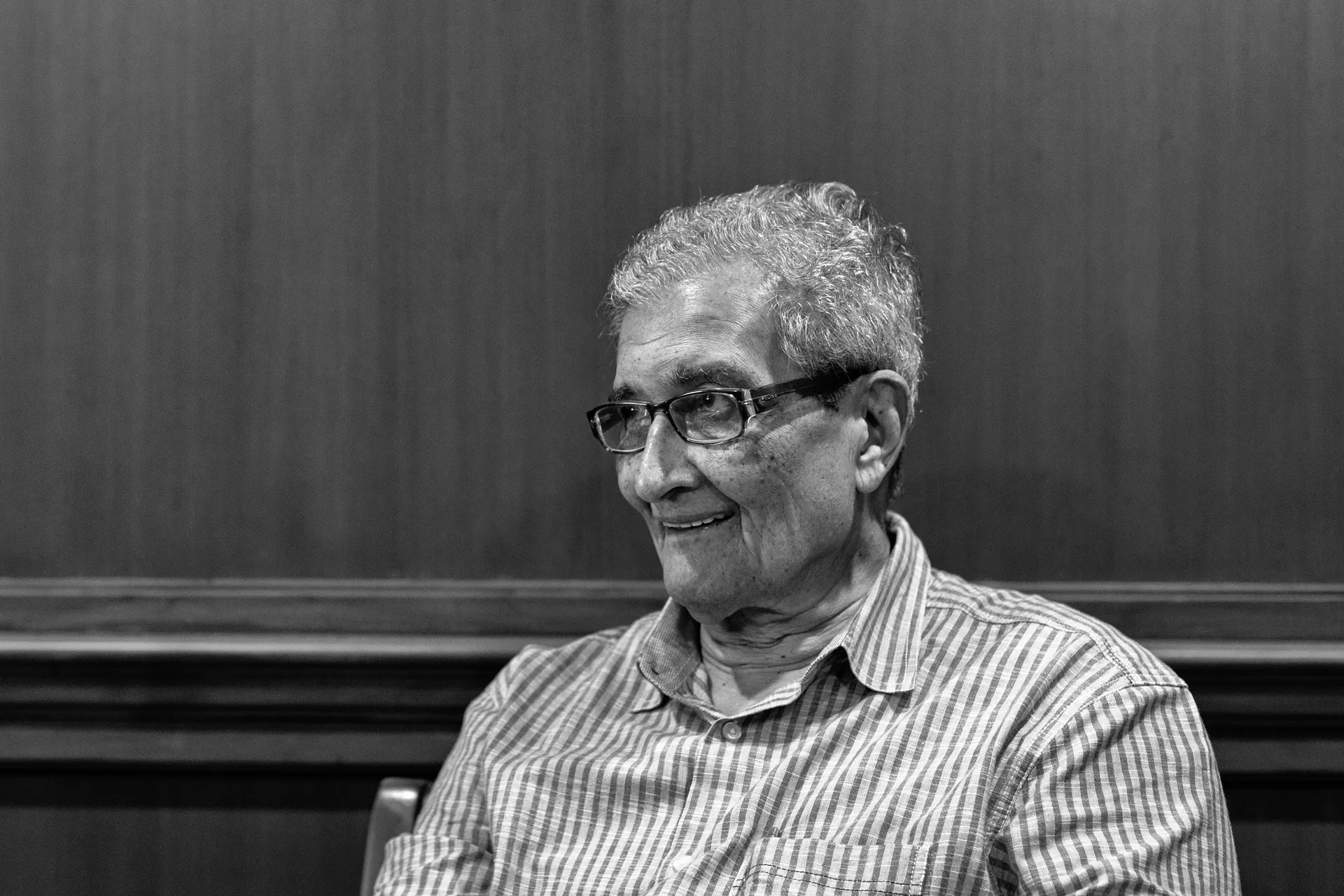
The Economic Times team was waiting in the lobby. Amartya Sen had decided he was done for the day—done with cameras, done with journalists, done with the business of being photographed. Amit, who’d spent the afternoon shooting him for Forbes India, was packing his lights when Sen asked if he had some more time. Amit assumed there were more pictures wanted.
“Sir, I don’t know anything about economics,” he said, once the silence had gone on long enough that someone had to break it.
“That is why you are sitting here.”
“Do you know where you want to reach?" Sen asked.
“Yes, sir.”
“What do you want?”
“I want to shoot nature.”
“Then half the job is done. At least you know. A lot of people don’t.”
Amit told him he couldn’t take the leap.
“When you take the leap, most of the time, when you land, it is in a better place.”
“What if I fail?”
“You’ll learn something you would never learn if you keep standing there. But why are you afraid of failure?”
“There is a cost.”
“Emotional or financial?”
“Financial.”
“Why is that?”
“Because I want an expensive camera.”
“Will that make you a better photographer?”
“I don't know, sir. I know it has amazing optics.”
“Do you want to buy a Leica?”
Amit nearly fell off his chair. He hadn’t expected a Nobel laureate to know cameras, let alone that one.
“Buy it. Not many people shoot with a Leica. Your ability to charge more will go up.”
“But I don’t want it for professional work,” Amit said. “The artist in me wants it to shoot black-and-white landscapes.”
“So you want to become an artist?”
“Yes, sir.”
“Your approach is wrong. To become an artist, you need to become an unreasonable person.”
I’ve been turning that line over for weeks. An economist counselling a photographer to be uneconomical. It sounds like a contradiction until you notice that Sen never said the numbers didn’t matter. He said the numbers were the wrong test.
Get an anchor client
Amit and I go back to an earlier newsroom—some of us at Founding Fuel had moved on by then to help launch Forbes India, and it was during that migration that Amit’s name came up. He’d walked into that earlier newsroom because a job was open, decided he didn’t like the vibe of the place, and did the first unreasonable thing I ever saw him do: asked for a senior title and thirty-five thousand rupees a month, certain he’d priced himself out. He got the job. Stayed three years.
When our co-founder Indrajit Gupta reached out to bring him onto the Forbes India team as staff photographer, Amit rang his mentor, a photographer named Rakesh Sahai, to ask whether to take it.
“Take it,” Sahai said. “But ask for a retainership.”
Nobody asked for retainerships in Indian newsrooms. It meant a fixed sum, nothing more—no expenses, no incentives, no safety net if the pictures stopped landing. Sahai told him the trade was worth it: the masthead would buy him exposure, and the exposure would buy him room to do his own work. His other condition was harder to keep. Your byline goes with every picture, he said. You work for yourself first, then the team, then the magazine. You can have a bad day. You cannot have a careless one.
It would be Dinesh Narayanan, trailing Rahul Gandhi’s campaign alongside Amit, who put a name to the arrangement. “Basically, Amit, Forbes India is your anchor client.” Not a salary—a salary is what an organisation thinks you’re worth this year. An anchor is what lets you take the trip to the mountain, or buy the lens, or say no to the client you don’t like.
I wrote the phrase down the day I heard it, meaning to use it for founders. The company thought it had hired a retainer. Amit had actually hired a harbour.
Amit treated the company camera the way he treated the retainer—useful, but not his. A Nikon flagship in 2012 ran close to three lakh rupees; the D700 most working photographers actually carried cost about half that. Either way, the company was paying, and Amit understood what that meant: the tool could be withdrawn the day the anchor was. So he built a second life around the first—teaching, private assignments, a solo show in the making—because a craft worth protecting is not the same thing as a shift worth finishing.
He reached a fork in his career. I’ll leave it there, because that’s as much as needs to be said.
Buy what frightens you
On the first of January, 2016, Sahai died. He was fifty-eight. Amit’s decision the next day was less a decision than a debt coming due.
Sahai had bought a digital Leica six months before he died. Amit had shot with it once and hadn’t stopped thinking about it since. His father, a Bikaner man watching his son circle the listings online, asked what it was.
“Leica. Khareedna hai.” I want to buy it.
“Kitna hai?” How much?
“Saade saat lakh.” Seven-and-a-half lakh.
His father told him to buy it if it would make the work better. Main hoon na, he said. I’m here for you.
A cousin passing through Dubai found a Leica showroom and bought the body for $5,800, on credit, no timeline attached. Amit told no one else—not his wife, not anyone—because what he now owned was a camera he’d dreamed about and couldn’t yet pay for, with a lens still to find. Then, on an unrelated shoot at the Maurya Sheraton in Delhi, he noticed a locked storefront. Leica was opening its first flagship in India, weeks from launch, and whoever was inside noticed him noticing.
“Buy it from us.”
Leica doesn’t discount. For its first enquiring customer, it did—body and lens together for ₹7.25 lakh, less than the body alone would have cost through the cousin’s route. The cousin returned his within the 18-day window. Amit put down the ₹25,000 he had, borrowed ₹4 lakh from a bank, and told his father he was still ₹3 lakh short.
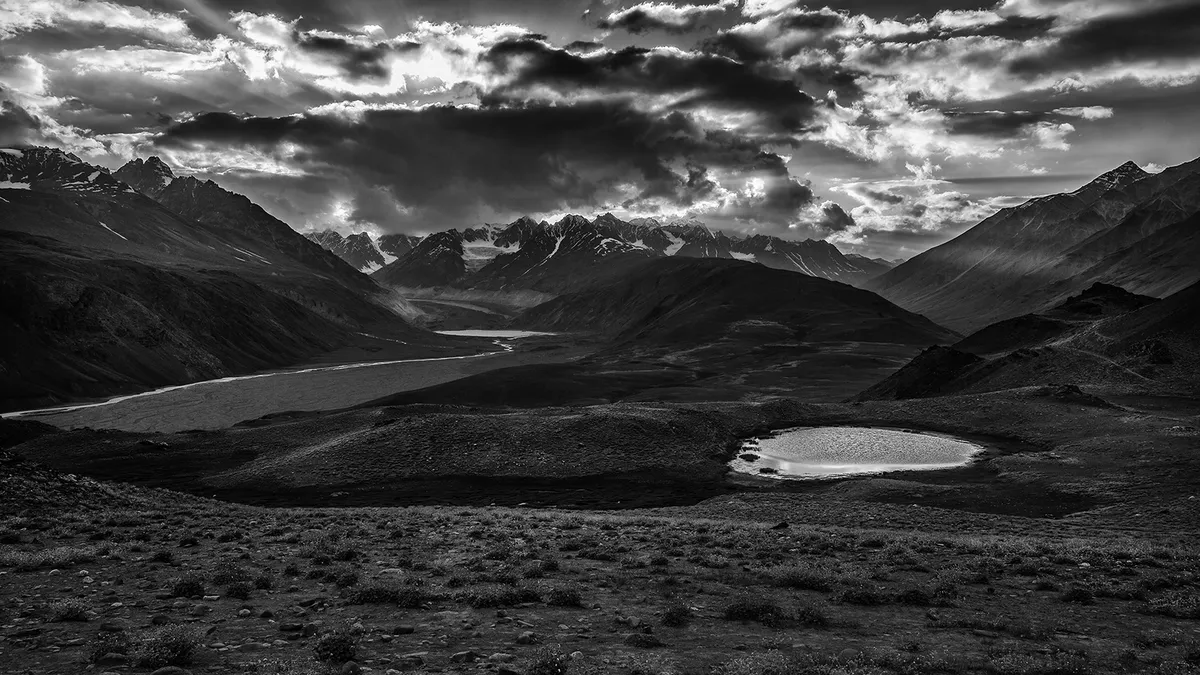
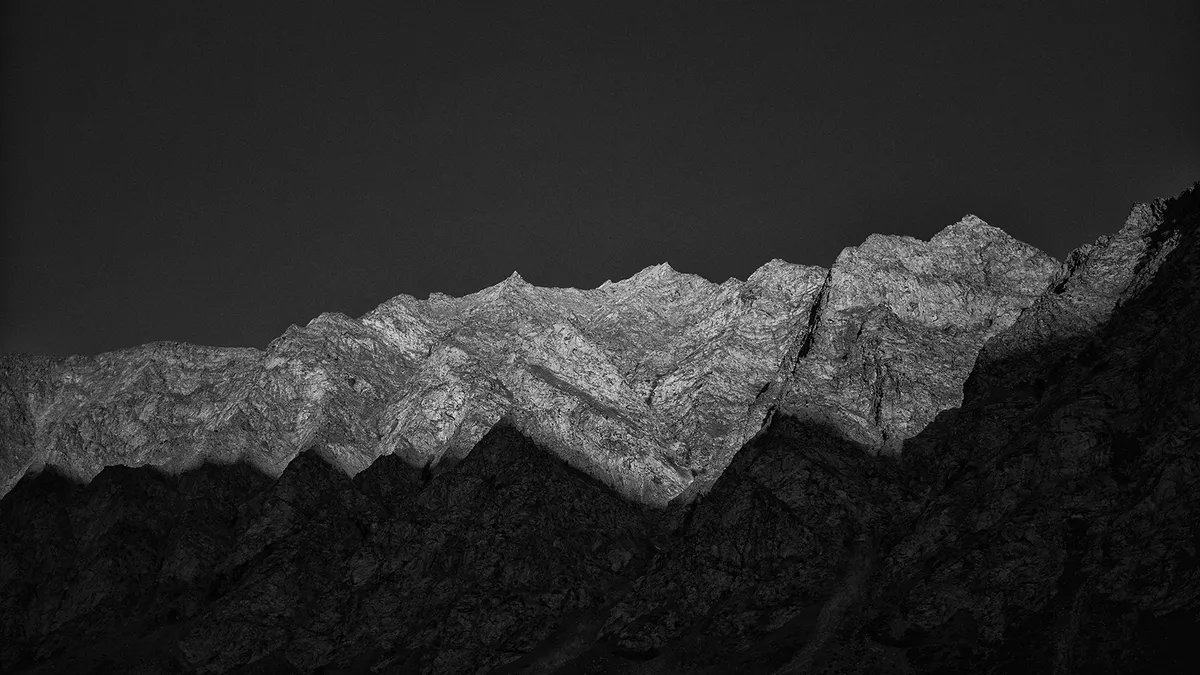
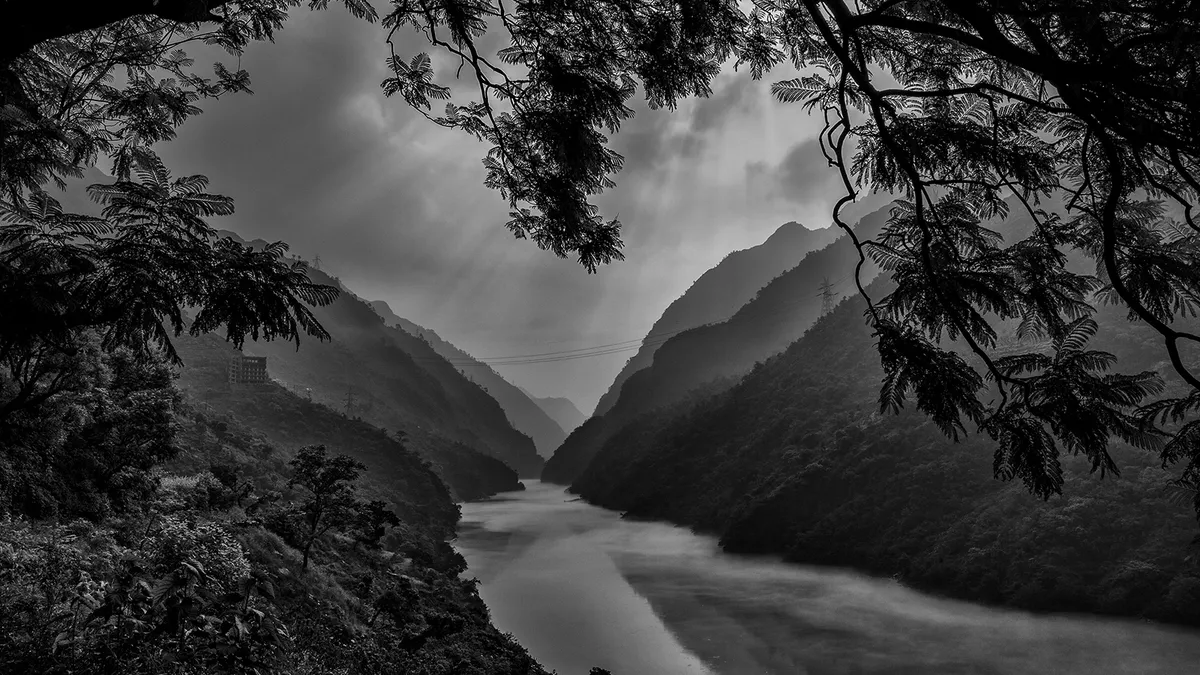
On a road trip to Lahaul-Spiti, shooting the Leica for the first time, he couldn’t see what the fuss was about. The files looked like his Nikon’s files. It wasn’t until he sat in a darkroom with the prints that the rocks came alive—a kind of dimensionality on a flat surface he hadn’t ordered and couldn’t have asked for.
The payback did not first come as a cheque. It started to arrive as positioning. The CEO of Adidas, who’d given him fifteen minutes for a shoot, cancelled his next meeting on seeing the camera in Amit’s hands and stayed for an hour. With the Leica in his bag, people began looking at him differently. The Leica store offered him a scholarship. Then came the offer of a solo show. “Such kind of things don’t happen with reasonable purchases,” he says.
The show came with its own arithmetic. Printing thirty photographs through a vendor would cost ₹40,000. A pigment printer of his own cost ₹1.25 lakh—nearly what three sets of exhibition prints would cost him through a vendor, which is what Leica was asking for, and once he owned it, it would print everything that came after too. Then came the paper: only a trained eye can see that the black a lens captures carries a shade of magenta once it’s on the page, and it took an Australian photographer to point Amit toward a 310 gsm stock from a German maker, Hahnemühle, before the black looked like black.
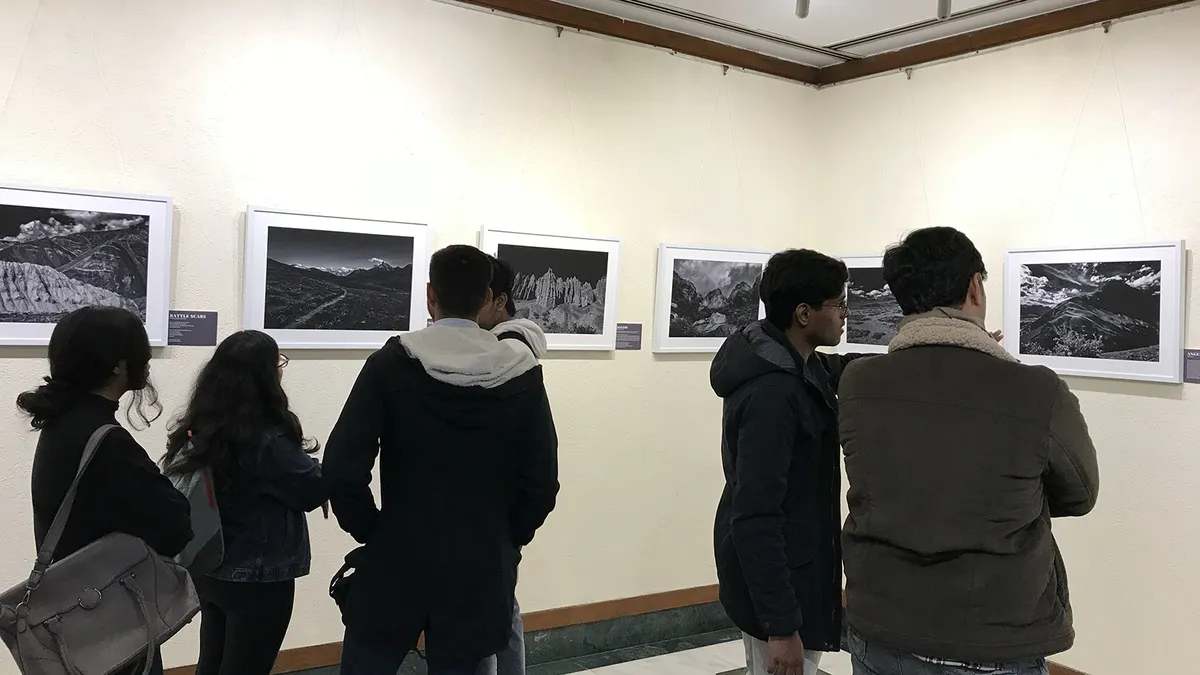
The Mountain Comes to Life: Amit Verma began taking these photographs with a Leica M in 2016. When Leica India invited him to exhibit the series in 2018, he bought his own printer after vendors could not produce the quality he wanted.
People around him had a word for all of it. Pagla gaya hai kya? Has he lost it?
Separately, on an assignment in Rajasthan, an American writer named Melissa Alipalo was going through his black-and-white mountain photographs and asked him a version of the question Sen had already asked once. Why aren’t you exhibiting these? After some brainstorming with her, he was ready to go.
If it already makes sense, everyone else is already doing it.
Most advice going into the show said price the prints low, to move them. Amit priced them at ₹35,000 each. Five sold. It covered the venue and put the printer and the paper narrowly into profit—proof, he told me, of a rule he trusts more now than any market advice he’s been given: “If it already makes sense, everyone else is already doing it.” So if it makes sense to everyone else, don’t do it.
What survives
That was 2018. Over the last two weeks, the both of us spent more than five hours, across at least two days, on the phone, on whether any of it still matters. My daughter was listening in because I asked her if she would be interested. She’s Gen Z and the only high-quality images she knows of are images that can be created on high-end phones.
She hasn’t come across people who work with cameras, lenses, printers or paper of the kind Amit was talking about. I don’t blame her. Because it went out of fashion a long time ago. The kind of devices she uses, she believes, can produce images that need none of this.
And that is how we landed somewhere none of us expected when the conversation started. It will be a matter of time before most people will expect to generate his kind of images; or narratives of the kind I work on.
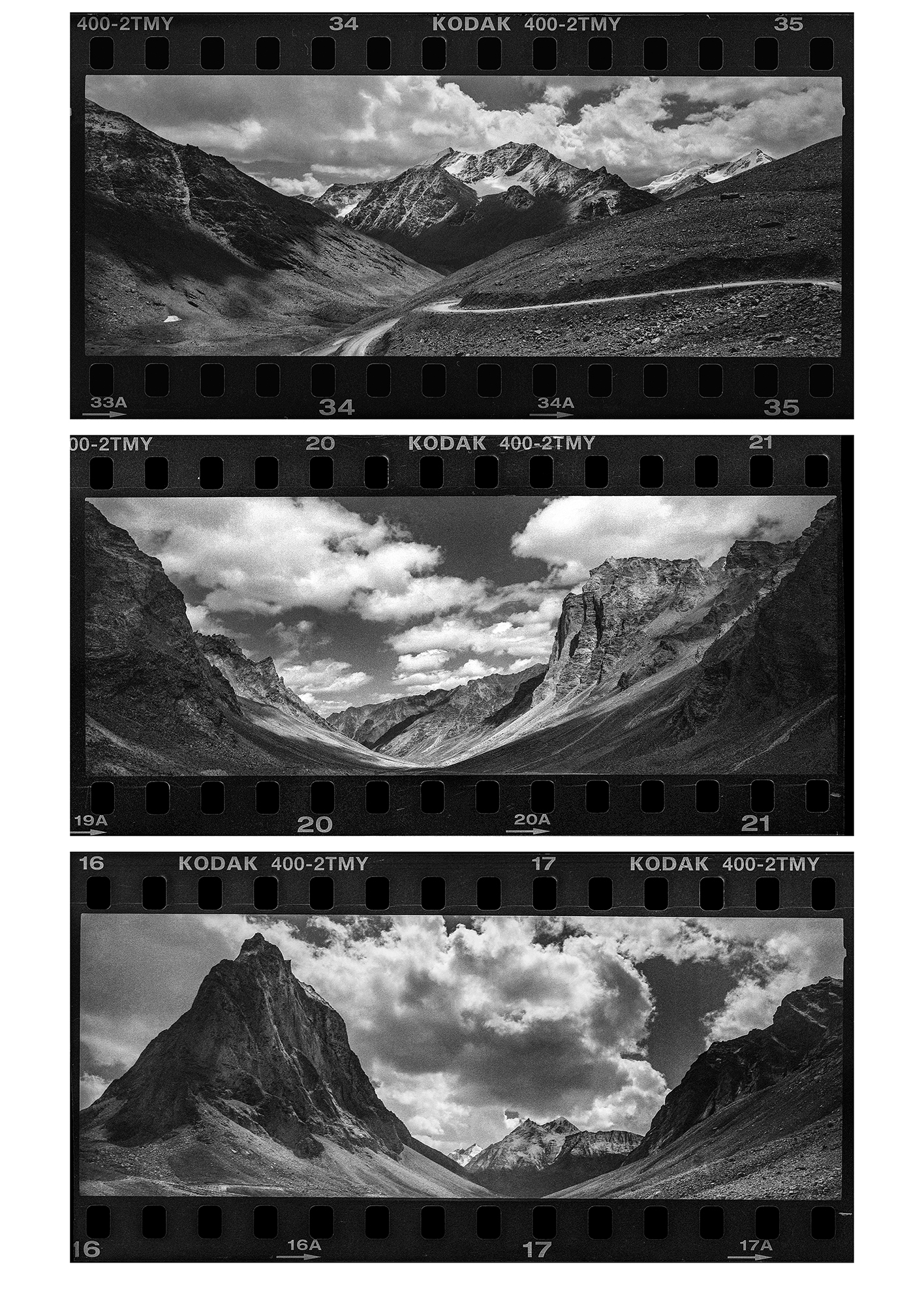
Eventually, we agreed that what machines will be unable to generate are ways of looking at the world he looks at. Because the prints he works on carry a hundred years of a process behind it—a scan with the sprocket holes left visible so you know it came from film, not from nothing. And narratives of this kind have emerged based on hours of conversations and years of understanding each other.
But there is something else Amartya Sen told Amit that day which has stayed with him as well: you are competing with the first world on third-world resources, and the only currency that closes that gap is talent applied without restraint. What Amit has built since is a kind of hybrid jugaad—film sourced from America, scans chosen one at a time by hand, ink laid down on paper made in Germany. None of it is pure, in the sense a purist would want. All of it is his.
You are competing with the first world on third-world resources, and the only currency that closes that gap is talent applied without restraint.
What survives won’t be the thing the eye can verify at a glance. It will be the unreasonable work nobody else was willing to put in.
Explore
Last year, Ashok Nair told Founding Fuel how he took a leap of faith, leaving behind a 30-year corporate career to pursue wildlife photography. His story echoes Amit Verma’s.
How do you take the plunge—and what sustains you afterwards?
Ashok and Amit have agreed to explore these questions with the Founding Fuel community. If you’d like to join the conversation, let us know—and send us your questions by filling this form.
We are working out a date for the conversation and will get back shortly.
Join the conversation
Charles Assisi
Co-founder and Director | Founding Fuel
Charles Assisi is an award-winning journalist with two decades of experience to back him. He is co-founder and director at Founding Fuel, and co-author of the book The Aadhaar Effect. He is a columnist for Hindustan Times, one of India's most influential English newspaper. He is vocal in his views on journalism and what shape it ought to take in India. He speaks on the theme at various forums and is often invited by various organizations to teach their teams how to write.
In his last assignment, he wore two hats: That of Managing Editor at Forbes India and Editor at ForbesLife India. As part of the leadership team, his mandate was to create a distinctive business title in a market many thought was saturated. When Forbes India was finally launched after much brainstorming and thinking through, it broke through the ranks and got to be recognized as the most influential business magazine in the country. He did much the same thing with ForbesLife India where he broke from convention and launched the title to critical acclaim.
Before that, he was National Technology Editor and National Business Editor at the Times of India, during the great newspaper wars of 2005. He was part of the team that ensured Times of India maintained top dog status in Mumbai on the face of assaults by DNA and Hindustan Times.
His first big gig came in his late twenties when German media house Vogel Burda marked its India debut with CHIP a wildly popular technology magazine. He was appointed Editor and given a free run to create what he wanted. During this stint, he worked and interacted with all of Vogel Burda's various newsrooms across Europe and Asia.
Charles holds a Masters in Economics from Mumbai Universtity and an MBA in Finance. Along the way he earned the Madhu Valluri Award for Excellence in Journalism and the Polestar Award for Excellence in Business Journalism.
In his spare time, he reads voraciously across the board, but is biased towards psychology and the social sciences. He dabbles in various things that catch his fancy at various points. But as fancies go, many evaporate as often as they fall on him.
Beyond the noise is the signal.
FF Insights: Sharpen your edge, Monday–Friday.
FF Life: Culture, ideas and perspectives you won't find elsewhere — Saturday.

Founding Fuel is sustained by readers who value depth, context, and independent thinking.
If this essay helped you think more clearly, you may choose to support our work.

Founding Fuel is sustained by readers who value depth, context, and independent thinking.
If this essay helped you think more clearly, you may choose to support our work.
Loading comments...


Readers also liked
·FF Life
The Courage to Be Tested Again
What an examination taught me that four decades of experience could not
IG

Indranil Gupta
Founder Director | BrandNEW Associates
The Courage to Be Tested Again
What an examination taught me that four decades of experience could not
Founder Director | BrandNEW Associates

·Artificial Intelligence
What Appears to Be AI Is Not
Beneath the chatter about chatbots, a deeper contest is unfolding—between nations, companies, and scientists racing to build the AI that will control life itself
SW

Sundeep Waslekar
President | Strategic Foresight Group
What Appears to Be AI Is Not
Beneath the chatter about chatbots, a deeper contest is unfolding—between nations, companies, and scientists racing to build the AI that will control life itself
President | Strategic Foresight Group

·FF Life
FF Life: GPT-4 and ChatAI could be your digital genie
They could be your personal librarian and a digital assistant that can translate, summarise, and even help you learn a new language
CA

Charles Assisi
Co-founder and Director | Founding Fuel
FF Life: GPT-4 and ChatAI could be your digital genie
They could be your personal librarian and a digital assistant that can translate, summarise, and even help you learn a new language
Co-founder and Director | Founding Fuel
Explore more
Dive into other themes from our network.