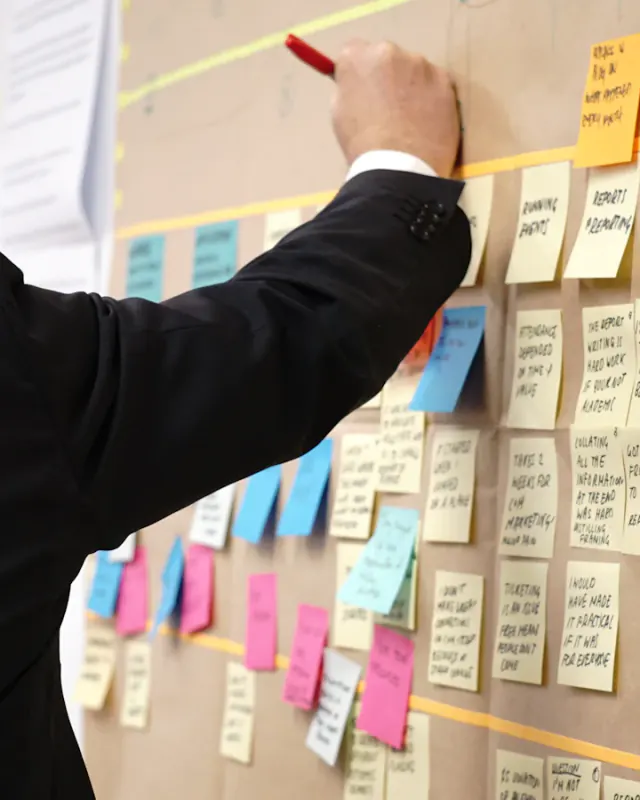
Embracing the Mess
AI can master discrete tasks. But judgment, relationships and responsibility are messy—and that may be exactly where humans matter most
7 August 2026· 8 min read
TL;DR
"Embracing the Mess" examines humanity's indispensable role amidst AI's rapid advancement. While AI adeptly handles discrete, logical tasks—from legal drafting to pattern recognition—it falls short in areas demanding judgment, relationships, and responsibility. The article warns against "dumbing down" human capabilities by over-outsourcing to AI, which can lead to skill atrophy. Instead, it champions uniquely human attributes: tacit knowledge, emotion, intuition, and courage, essential for navigating a complex world. The enduring demand for radiologists, despite AI's superior scan analysis, illustrates that true human value lies not just in tasks, but in these messy, nuanced applications of intelligence.

A few years ago, after ChatGPT launched, my WhatsApp groups were full of discussions about how AI would take away all the jobs.
Then I came across a video of a lecture by J Krishnamurti, delivered in Chennai in 1981. I was surprised that he said pretty much the same thing back then: that in ten to fifteen years we will all be unemployed, because computers and robots will take over our jobs.
Then he asked a deeper question: “If the computer can do everything that you can do—if it can compose a poem, if it can diagnose better than any doctor—then we ask: What is man? What are you?”
Listening to the video, I got a feeling that his audience took his views on computers with a pinch of salt. “You are laughing”, Krishnamurti told them at one point. "You don't see this seriousness of it all."
If he were to give that lecture today, no one would miss the seriousness of it. Most of us have experienced what AI can do first-hand. It’s particularly good at certain types of work—coding, drafting legal documents, filing taxes, etc. Today, the fear that it can take over our jobs is real.
The main danger is not that AI would exceed humans’ intelligence but that we might meet them halfway by dumbing down our capabilities.
There is another concern too: that we might be making it easy for AI. As Dave Snowden, a complexity expert, puts it: “The main danger is not that AI would exceed humans’ intelligence but that we might meet them halfway by dumbing down our capabilities.”
This happens in two ways.
First, when we outsource a task to AI our skills atrophy. Several studies have confirmed that. For example, students given access to ChatGPT improved on practice problems but performed worse on unaided exams than peers who never used AI. Similarly, essay writers using ChatGPT showed weaker brain engagement, poorer memory of their own work, and less ownership over the final text compared to those writing traditionally or with search engines. Software engineers learning new programming languages with AI assistance performed worse on subsequent conceptual and debugging tasks than those who learned without it.
Second, when we organise our organisations around AI, which represents one type of thinking (highly formalised, explicit, and logical) there is a danger that we could underplay the other modes of thinking (decisions that involve tacit knowledge, emotions, judgement, taste, intuition and courage). Humans can’t compete against the first type of thinking that AI excels in. Humans excel at the second type. It’s these qualities that have helped humans to navigate this complex, messy world. In the age of AI, these qualities will matter more than ever—as radiologists have shown us.
Tasks Vs Jobs
In 2016, Geoffrey Hinton, considered to be one of the "godfathers" of AI, said that within five years, AI would be better than human radiologists. "We should stop training radiologists now," he suggested. He had a strong reason. Radiology is mostly about looking at a medical scan and spotting anomalies, like a faint shadow on a lung or a subtle hairline fracture. It’s essentially pattern recognition. From his vantage point, Hinton could see that AI was getting better and better at it. Therefore, he figured, AI would soon outperform human doctors, rendering radiologists obsolete.
Fast forward to today. Hinton was right in one way. AI has gotten incredibly good at reading scans. It can spot anomalies with staggering speed and accuracy. An AI tool from Mayo Clinic can detect pancreatic cancer three years before diagnosis.
Yet, Hinton was wrong in a more important way. Radiologists haven't disappeared. In fact, the demand for radiologists has only increased. Hospitals continue to advertise their roles. How did Hinton get it wrong?
In his book Reshuffle, Sangeet Paul Choudary points out that Hinton made a classic error: he confused a task with a job. Reading a scan to find a shadow on a lung is a task. AI can do it better than a human doctor. But being a radiologist is a job. In a job, tasks, responsibilities, human relationships—everything gets entangled. Besides reading the scans, a radiologist has to communicate bad or confusing news to anxious patients. He has to offer empathy and reassurance (even though it’s true that many don’t). He has to consult with surgeons and oncologists to come up with a treatment plan. And most importantly, he bears the moral and legal responsibility for the decisions.
An algorithm can do the clean, simple task of pattern recognition. However, it cannot hold a patient’s hand or navigate hospital politics, or sit across a patient’s family if something goes wrong. Only humans can handle the complex, entangled reality of the job itself.
Tasks tend to be clean, but jobs are often messy.
Messy Jobs
In their book Messy Jobs: The Work That AI Cannot Reach, Luis Garicano, Jin Li, and Yanhui Wu argue that all knowledge work sits on a spectrum of "messiness”.
On one end of the spectrum, there are “clean”, single-task jobs. These jobs have clear inputs and verifiable outputs. Think of tasks like translating a basic technical manual, categorising home loan applications, drafting a standard legal contract, or even doing taxes. For these jobs, AI easily crosses what the authors call the “autonomy threshold”. It can do the work entirely on its own. The human worker has very little to offer.
But most jobs are “messy”. A messy job is a mix of simple and complex tasks. Messy jobs comprise “a tangle of interdependent tasks involving people and politics”. It is difficult to separate the automatable parts from the human parts without destroying the value of the work itself.
Take journalism, for example. Because an AI chatbot can instantly generate a 500-word news brief about a corporate earnings report, we tend to think journalists will be replaced. But journalism is a messy job too. It often involves on-the-ground reporting and knowing the smell of a place. (Novelist Fredrick Forsyth once said: “Nowadays a lot of people think they just sort of log everything. Up to a point, yes, you can get facts and figures on the Internet. But can you get the smell of the place? Can you get the atmosphere?”). It almost always involves dealing with people—building trust with a nervous whistleblower over coffee, reading the subtle body language of a politician dodging a question, understanding the social nuances of a community. Everything is contextual. What works once might not work again. A media organisation can still organise itself around AI workflows. But, people will stop seeing value in it, sooner or later. It’s because all of us have an intuitive understanding of what dealing with complexity means, since we constantly deal with friends, parents, siblings, spouses and kids.
Dave Snowden has argued that humans have to navigate multiple domains—simple (in which the cause and effect are clear), complicated (which needs experts to figure out the connection between cause and effect) and complex (where everything is entangled, and often involves humans). Machines can handle simple or complicated tasks, but it often needs humans to handle complexity.
Messy jobs are complex, and involve holding together coalitions, adjudicating conflicts, managing unpredictable emotions, and convincing people to change. Messy jobs will need humans.
Outsourcing Jobs to AI
If messy jobs will always be there, and if they will always need humans, then what are we actually worried about?
The danger is that we will mistakenly treat our messy jobs as simple ones, delegate them to AI out of convenience, and slowly go out of touch with more important aspects of a job—common sense, practical knowledge, judgement and intuition
In many jobs, simple and complex are entangled. Rookies become veterans by struggling through the friction of the work. If a young professional uses AI to instantly draft every document or summarise every meeting, they bypass the gruelling mental effort required to truly understand their field.
Messy Jobs calls this the “AI-Becker problem” (after economist Gary Becker who had written about companies underinvesting in junior workers). Historically, junior workers ground through massive volumes of low-level “grunt work”. This routine work served as the “currency” that paid for their training and mentorship. When AI automates those cognitive tasks, that currency disappears, and the traditional apprenticeship model breaks down.
So, what options do rookies have now? Messy Jobs offers some ways. Junior roles must pivot from routine production to quality assurance and verification. If AI drafts the initial scan analysis, the rookie builds expertise by checking assumptions, tracing the machine’s logic, and catching errors. Similarly, training must shift to the “messy” work of coordination and implementation. For example, a rookie radiologist should spend more time shadowing veterans to learn the relational and political dynamics of triaging cases, consulting colleagues, and comforting anxious patients. (This happens as a part of doctor’s training, but the trick is in balancing the two.
Staying Smart
What else can we do as individuals?
To find answers, I went to a recent book by Gerd Gigerenzer. In How to Stay Smart in a Smart World, Gigerenzer argues that the way to do it is to understand where algorithms succeed and where they fail, and stay firmly in the driver’s seat. Here are five insights from the book.
1. Know AI's limits
Even today, many operate under the assumption that because AI can beat a grandmaster at chess or Go, it can solve any problem. That’s the whole premise of Artificial General Intelligence (AGI). But Gigerenzer points out a flaw in this logic: chess is a “stable world”. The board has 64 squares, the pieces always move the same way, and the rules never change. AI thrives in stable worlds with large amounts of data. But human life—finding true love on a dating app, hiring the right employee, or forecasting a financial crisis—is full of what he calls “radical uncertainty”. The rules change, and humans act unpredictably. Here’s Gigerenzer's recommendation: let AI handle stable, well-defined tasks, but never blindly trust it to make predictions in the messy, uncertain world of human behaviour. In an unstable world, human intuition and common sense still outperform big data.
2. Spot false predictions
We are constantly bombarded by claims that AI can predict our futures—everything from tracking flu outbreaks to forecasting which couples will divorce or who will commit a crime. Gigerenzer warns against this marketing hype, pointing to the “Texas Sharpshooter Fallacy”. Imagine a cowboy who fires random bullets into a barn, then walks up and paints a bullseye around the tightest cluster of holes to look like a genius marksman. Tech companies do this all the time. They fit their algorithms perfectly to past data (painting the bullseye after the fact), then aggressively market it to the public as a miraculous “prediction”. Fitting the past is not the same as predicting the unknown future.
Gigerenzer points out how this is frequently used in finance. Investment firms will run “backtests” (historical simulations) using large numbers of investment strategies against past market data. They find the one strategy that happened to accidentally match the market's past movements perfectly, and then they aggressively advertise it to customers as an “innovative strategy” that beats the market by 5%.
3. Step outside to verify
In a digital world overflowing with bots, deepfakes, and sophisticated misinformation, being a “digital native” doesn’t automatically mean you can spot a fake. Gigerenzer notes that when evaluating online information, most people read vertically—they start at the top of a sleek website and scroll down, easily fooled by professional design and reassuring “About Us” pages. Professional fact-checkers do the opposite. They read laterally. The moment they land on a site, they open new browser tabs to search outside the website and find out who actually funds the organisation and what their agenda is. He also recommends “click restraint”—don't blindly click the top search result on Google, which is often a paid ad or optimised content. Don't trust the surface; always step outside the frame to verify the source.
4. Keep skills alive
There’s a paradox in automation. The more advanced an automated system becomes, the more crucial a highly skilled, attentive human becomes when things inevitably go wrong. But if we outsource all our effort to machines, our own skills atrophy. Gigerenzer points to GPS. If you rely on it for every trip, your brain stops building a cognitive map of your environment, and your spatial awareness degrades. His advice is straightforward: use it or lose it. Turn off the GPS for familiar routes. Do mental math instead of reaching for a calculator. Exercise your brain like a muscle so you aren't left helpless when the machine fails.
5. Distance yourself from your phone
Tech companies use behavioural psychology—specifically “intermittent reinforcement”, the same unpredictable reward system used in slot machines—to hijack our attention with likes and notifications. You might think you are in control as long as your phone is on silent, but Gigerenzer highlights studies showing that the mere physical presence of a smartphone on your desk, even if completely off, measurably drains your cognitive capacity. Your brain subconsciously spends energy suppressing the urge to check it. To stay sharp and maintain your mental bandwidth, you need physical distance from your tech. He suggests creating a space outside your bedroom where the phone sleeps for the night, allowing you to reclaim your attention.
Keeping some distance from our mobile phones whenever we can might be a good place to start. If machines handle the predictable, routine tasks, we can create space for ourselves to do the other tasks.
When J Krishnamurti posed the question, ‘If the computer can do everything that you can do, what is man?’ he was also asking us to look at our own thinking. Perhaps we should question if it has become so mechanical that even a machine can do exactly what we can do. And if it’s good to break out of that mode and embrace the complexity and messiness of life.
Join the conversation
N S Ramnath
Senior Editor | Founding Fuel
NS Ramnath is a member of the founding team & Lead - Newsroom Innovation at Founding Fuel, and co-author of the book, The Aadhaar Effect. His main interests lie in technology, business, society, and how they interact and influence each other. He writes a regular column on disruptive technologies, and takes regular stock of key news and perspectives from across the world.
Ram, as everybody calls him, experiments with newer story-telling formats, tailored for the smartphone and social media as well, the outcomes of which he shares with everybody on the team. It then becomes part of a knowledge repository at Founding Fuel and is continuously used to implement and experiment with content formats across all platforms.
He is also involved with data analysis and visualisation at a startup, How India Lives.
Prior to Founding Fuel, Ramnath was with Forbes India and Economic Times as a business journalist. He has also written for The Hindu, Quartz and Scroll. He has degrees in economics and financial management from Sri Sathya Sai Institute of Higher Learning.
He tweets at @rmnth and spends his spare time reading on philosophy.
Beyond the noise is the signal.
FF Insights: Sharpen your edge, Monday–Friday.
FF Life: Culture, ideas and perspectives you won't find elsewhere — Saturday.

Founding Fuel is sustained by readers who value depth, context, and independent thinking.
If this essay helped you think more clearly, you may choose to support our work.

Founding Fuel is sustained by readers who value depth, context, and independent thinking.
If this essay helped you think more clearly, you may choose to support our work.
Loading comments...


Readers also liked

·Technology & the Future
Embracing AI without losing ourselves
As the machines are advancing relentlessly, do we let AI think for us, or do we stay actively human?
KA

Kavi Arasu
Leadership and Talent Development Professional
Embracing AI without losing ourselves
As the machines are advancing relentlessly, do we let AI think for us, or do we stay actively human?
Leadership and Talent Development Professional

·Business & Strategy
Masters of the universe
The online-offline battle isn’t over. Traditional retailers have been upping the game through creative promotions, spreading the sale period over a longer time period and embracing online
FF

Founding Fuel
Masters of the universe
The online-offline battle isn’t over. Traditional retailers have been upping the game through creative promotions, spreading the sale period over a longer time period and embracing online

·Entrepreneurship, Startups & Innovation
Embrace chaos and ambiguity to build world class software products
Products often mean you are embarking on a choppy, risky, longish journey. You are thinking about a customer problem from first principles, with no sight of when you will get anywhere close to a business model, revenues, customers and profits
AR

Amit Ranjan
Architect for the National Digital Locker Project | Ministry of Electronics and IT
Embrace chaos and ambiguity to build world class software products
Products often mean you are embarking on a choppy, risky, longish journey. You are thinking about a customer problem from first principles, with no sight of when you will get anywhere close to a business model, revenues, customers and profits
Architect for the National Digital Locker Project | Ministry of Electronics and IT
Explore more
Dive into other themes from our network.