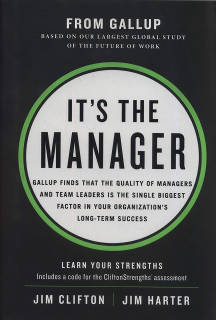
It’s the Manager
By Jim Clifton and Jim Harter
Insights from Jim Clifton and Jim Harter’s book ‘It’s the Manager’. The book is based on the largest global study by Gallup on the future of work
Operating Partner | Advent International
Shivakumar is Operating Partner at Advent International. Before this, he was President (Corporate Strategy and Business Development) at Aditya Birla Group. Earlier assignments include: Chairman & CEO at Pepsico India and prior to that, Managing Director at Nokia India. Before joining Nokia, he worked with consumer electronics maker Philips and top consumer goods firm Hindustan Unilever. He is an engineer from IIT Chennai and an MBA from IIM Calcutta.
Shivakumar has written three books: Reflections - a collection of Shivs articles; The Right Choice - Resolving Ten Career Dilemmas; and The Art of Management. The latter two are business bestsellers.
FF Insights: Sharpen your edge, Monday–Friday.
FF Life: Culture, ideas and perspectives you won't find elsewhere — Saturday.

Founding Fuel is sustained by readers who value depth, context, and independent thinking.
If this essay helped you think more clearly, you may choose to support our work.

Founding Fuel is sustained by readers who value depth, context, and independent thinking.
If this essay helped you think more clearly, you may choose to support our work.

The debate is not simply about an IPO. It is about whether patient capital, stewardship and social purpose depend upon privacy, or can be protected through a different institutional architecture.

Indrajit Gupta
Co-founder and Director | Founding Fuel
The debate is not simply about an IPO. It is about whether patient capital, stewardship and social purpose depend upon privacy, or can be protected through a different institutional architecture.
Co-founder and Director | Founding Fuel
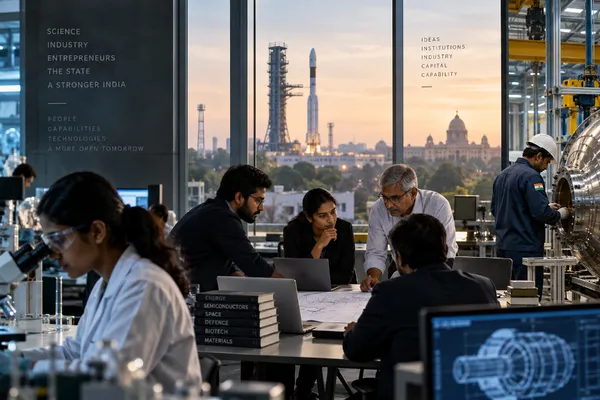
Can India build a new compact between the state, science, industry and entrepreneurs?

S. Raghotham
Journalist and strategic analyst
Can India build a new compact between the state, science, industry and entrepreneurs?
Journalist and strategic analyst

Indian companies are more alert to geopolitics. The task now is to turn that awareness into capability: map dependencies, protect what matters, adapt the enterprise, and find competitive advantage in fragmentation.

G Venkat Raman
Professor, Humanities and Social Sciences | Indian Institute of Management, Indore
Indian companies are more alert to geopolitics. The task now is to turn that awareness into capability: map dependencies, protect what matters, adapt the enterprise, and find competitive advantage in fragmentation.
Professor, Humanities and Social Sciences | Indian Institute of Management, Indore
Dive into other themes from our network.