Founding FuelFounding Fuel

Forging strong, compassionate leaders

In their book, ‘Character Carved in Stone’, Pat Williams and Jim Denney talk about the values the United States Military Academy at West Point cultivates to make strong leaders
2 March 2019· 1 min read

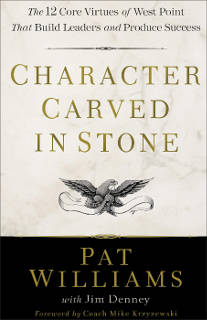
Character Carved in Stone 

By Pat Williams and Jim Denney

Buy it on Amazon

Slide

The 12 leadership virtues of West Point

  • Compassion
  • Courage
  • Dedication
  • Determination
  • Dignity
  • Discipline
  • Integrity
  • Loyalty
  • Perseverance
  • Responsibility
  • Service
  • Trust

“Leadership is a potent combination of strategy and character, but, if you must be without one, be without the strategy” – General Norman Schwarzkopf

The compassionate leaders that I have known were not feared but were always respected. They were tough when they had to be and compassionate when understanding what was needed, but they were never soft or weak.

I know leaders who thought they were compassionate but did not know what compassion meant. They tried to lead by getting people to like them. If your compassion comes from wanting to be liked, then you are a weak leader.

A weak leader avoids controversy; you will back down when you need to stand firm. You will surrender when you should go to war, you will sugar-coat the hard truths and you will confuse compassion with cowardice.

Leaders with authentic compassion are strong, courageous, honest and direct. They say what needs to be said, with empathy.

It is possible to motivate people with fear, but love is a better and more powerful motivator.

When people feel safe around a leader, they take risks but they will achieve a lot.

Types of courage

  • Physical courage
  • Moral courage
  • Emotional courage
  • Intellectual courage
  • Spiritual courage

Courage is rooted…

  • Become a more disciplined person
  • Face your fears
  • Practice demonstrating courage everyday
  • Embrace uncertainty
  • Replace fear with faith

Dedication clarifies our goals and the tasks required. When you are dedicated to a cause, you will never wake up and wonder, “What should I do today?”

If you are in business, you have to dedicate yourself to excellence, integrity, service to customers, benefits to employees and giving back to community.

Determination is a virtue every leader needs, especially when facing crises, obstacles and opposition. Determination means making up your mind that you will achieve your goal; you will not give up, you will not accept defeat, you will not take no for an answer.

If you are not determined about your goal, you will find yourself surrendering to indecision, hesitation and paralysis.

“I like Generals who are so bold that they are dangerous.” – General John Pershing.

Dignity was once a highly prized virtue in our society. People valued their own dignity and respected the dignity of others.

Today, our entertainment, our literature, our conversations at work and on the street, all of them have lower respect.

America was once led by statesmen such as Washington and Lincoln, who elevated and dignified the office they led. Today we are forced to choose amongst candidates who engage in name calling, schoolyard taunts and indecent behaviour.

We maintain our dignity through good conduct and good manners, by remaining calm and poised under pressure, by being thoughtful instead of emotional, by accepting setbacks and disappointments, by demonstrating excellence in all that we do.

Success is the result of discipline, of repeatedly doing the things that lead to excellence. How then do we become disciplined?

How do we become the type of people who choose the gym over the donut shop, a good book instead of a mind-numbing TV show, saving and investing instead of spending and consuming? How do we consistently choose excellence over mediocrity?

Habits that produce excellence

  • Build good habits, through self-discipline
  • Define what you want to achieve
  • Whatever you dream of, start now
  • Flee temptation
  • If you fail, forgive yourself, get back on track
  • Find role models and mentors
  • Commit yourself

Legal behaviour and ethical behaviour are not one and the same. Ethical action is legal but not all legal action is ethical.

We build our integrity moment by moment, year after year, by making moral decisions and speaking the truth.

Most leaders see loyalty as a one way street, they expect loyalty but are not loyal.

Loyalty is based on commitment, not feelings. You can be loyal to a person you don’t like.

Building loyalty in your team

  • Mentor them and help them advance in their careers
  • Keep your office door open
  • Give credit to your people
  • Challenge your people and inspire them to greatness
  • Work shoulder to shoulder with them
  • Be real

Let’s put an end to complaining, blaming, offering excuses, and take responsibility for our actions.

Trust is the glue that holds an organisation, a team together. When we trust one another, we can achieve great things. Without trust we are defeated before we begin.

Trust is crucial in keeping the lines of communication open. Trust is a force multiplier.

Character Carved in Stone: 

The 12 Core Virtues of West Point That Build Leaders and Produce Success

By Pat Williams and Jim Denney

Buy it on Amazon

Founding Fuel is sustained by readers who value depth, context, and independent thinking.

If this essay helped you think more clearly, you may choose to support our work.

Illustration of supportersIllustration of supporters
Loading comments...

Readers also liked

How Iran Is Turning the Global Economy Into a Battlefield
·Economy, Policy & Society

How Iran Is Turning the Global Economy Into a Battlefield

As the conflict with the United States and Israel intensifies, Iran’s new leadership is signalling a prolonged confrontation—one that combines conventional warfare with pressure on global energy flows and supply chains.

VK
Vivek Y. Kelkar

Vivek Y. Kelkar

Researcher, Analyst & Columnist on Geo-economics, Geopolitics and Sustainability

The US–Israel War on Iran: The Risks to India’s Strategic Hedging
·Economy, Policy & Society

The US–Israel War on Iran: The Risks to India’s Strategic Hedging

Energy dependence, remittance flows and trade corridors reveal how deeply India’s economy is tied to stability in West Asia. Part II of a two-part series.

VK
Vivek Y. Kelkar

Vivek Y. Kelkar

Researcher, Analyst & Columnist on Geo-economics, Geopolitics and Sustainability